HERO SECTION
Rust doesn't appear overnight.
And effective corrosion protection shouldn't begin with simply covering it with paint.
A successful transformation starts by understanding the condition of the metal and following the appropriate preparation process.
INSPECT → CLEAN → REMOVE → TREAT → PRIME / DTM → PROTECT
From:
RUSTED METAL
to:
PREPARED & PROTECTED METAL
Jahan Rust, Wahan FERONIX.
THE BEFORE & AFTER STORY
A rusty surface can look like a painting problem.
But underneath the visible rust may be:
- Loose corrosion
- Rust scale
- Dirt
- Oil
- Salt
- Moisture
- Old coating
- Surface contamination
Simply painting over these problems may hide them temporarily without addressing the underlying surface condition.
That is why FERONIX focuses on the surface before the coating.
WHAT DOES "RUST TRANSFORMATION" MEAN?
Rust transformation means taking a corroded or deteriorated metal surface through a controlled preparation and protection process.
The process may involve:
The exact steps depend on the condition of the metal and the selected coating system.
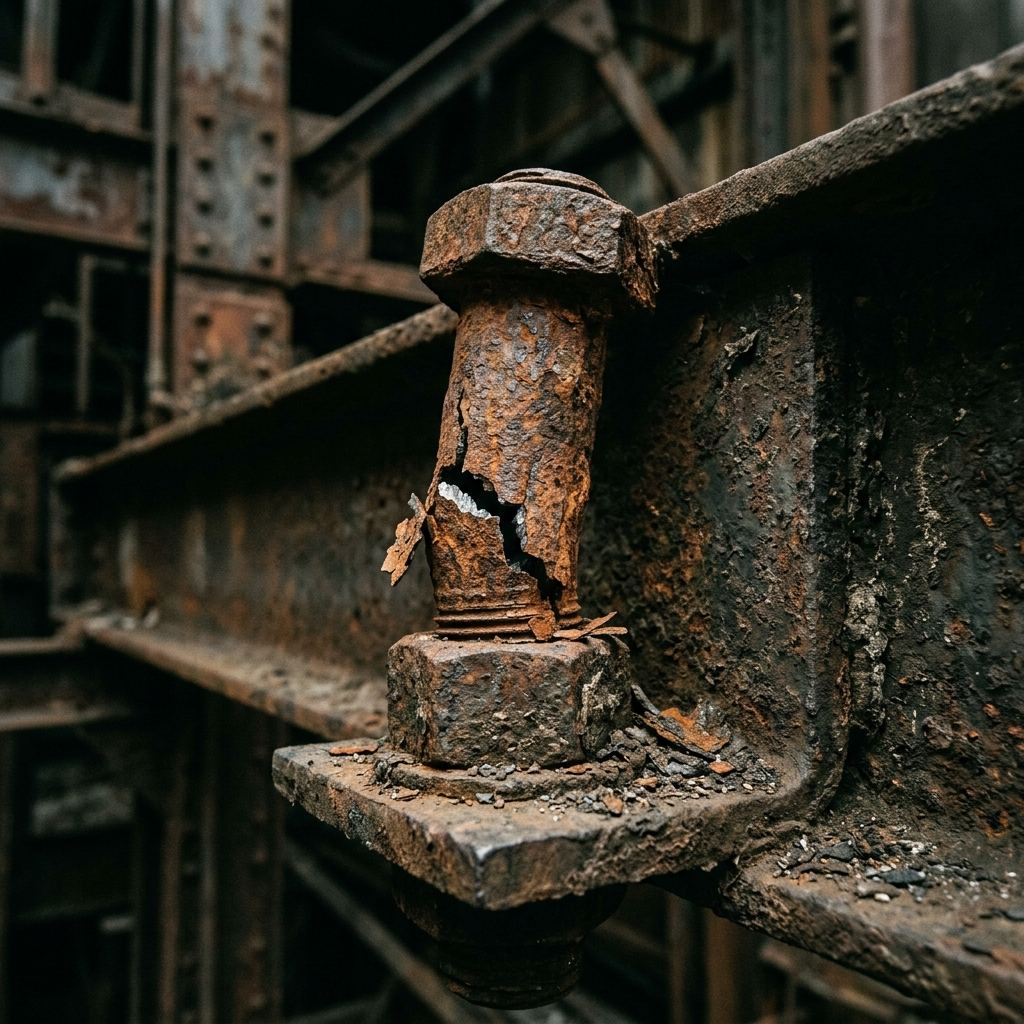
BEFORE: WHAT DOES A RUSTY SURFACE LOOK LIKE?
A heavily corroded surface may show:
- Orange/brown rust
- Flaking corrosion
- Rust scale
- Peeling paint
- Blistering
- Bare steel
- Surface pitting
- Cracked coating
- Dirt accumulation
These are signs that the surface needs assessment before repainting.
AFTER: WHAT SHOULD A PROPERLY PROTECTED SURFACE LOOK LIKE?
After appropriate preparation and coating, the surface should have:
- Sound substrate preparation
- Removal of loose corrosion
- Suitable treatment where required
- Proper coating adhesion
- Uniform coverage
- Appropriate coating thickness
- Reduced exposure of the metal to the environment
The goal is not merely:
"Make the metal look new."
The goal is:
PREPARE THE SURFACE + PROTECT THE METAL
THE FERONIX BEFORE & AFTER TRANSFORMATION
STAGE 1
Identify:
- Rust severity
- Existing coating
- Contamination
- Pitting
- Damaged areas
↓
STAGE 3
CLEAN
Remove:
- Dirt
- Dust
- Oil
- Grease
- Salt
- Other contaminants
↓
STAGE 4
REMOVE
Use appropriate mechanical or chemical preparation to address loose corrosion.
Where suitable residual rust remains:
Where a conventional primer system is required:
For suitable prepared-metal DTM applications:
BEFORE & AFTER — RUSTY IRON GATE
BEFORE
A gate exposed to:
- Rain
- Humidity
- Dust
- Salt
- Moisture
can eventually develop corrosion.
Typical vulnerable areas:
- Hinges
- Welds
- Bottom edges
- Corners
- Scratches
- Joints
Clean the gate.
Step 2
Remove loose rust and deteriorated coating.
Step 3
Use RUSTKLEEN where appropriate.
Step 4
Use RUSTCON where suitable residual rust requires treatment.
Step 5
Apply the appropriate primer or DTM system.
Step 6
Protect with the selected FERONIX coating system.
AFTER
The result should be a properly prepared and coated metal surface with improved protection against environmental exposure.
RUSTY GATE → PREPARED GATE → PROTECTED GATE
BEFORE & AFTER — METAL RAILINGS
Railings are continuously exposed to the environment.
Common corrosion locations include:
- Welds
- Base plates
- Handrail joints
- Corners
- Bottom sections
A good transformation requires more than applying fresh paint over visible rust.
→
Clean
→
Remove
→
Treat
→
Protect
BEFORE & AFTER — STEEL STRUCTURES
Industrial steel structures can develop corrosion over large areas.
Look closely at:
- Columns
- Beams
- Trusses
- Welds
- Connections
- Base plates
- Bolts
Important
If significant pitting, section loss or structural deterioration is present, the condition should be assessed by an appropriately qualified professional before coating work.
BEFORE & AFTER — INDUSTRIAL MACHINERY
Industrial machinery can develop corrosion due to:
- Moisture
- Humidity
- Chemicals
- Dust
- Process contamination
- Coating damage
The correct coating system depends on the machinery's operating environment.
BEFORE & AFTER — AGRICULTURAL EQUIPMENT
Agricultural equipment can encounter:
- Mud
- Water
- Fertilizers
- Chemicals
- Soil
- Humidity
Regular cleaning and corrosion inspection can help identify problems before they become extensive.
BEFORE & AFTER — COASTAL METAL
Coastal environments add another challenge:
SALT
Salt-containing moisture can contribute to corrosion.
For coastal surfaces, appropriate cleaning and surface-preparation procedures are especially important before coating.
Read more:
Coastal Corrosion Protection
BEFORE & AFTER — WHAT ACTUALLY CHANGES?
A good transformation should not be judged only by colour.
There are several levels of improvement.
DON'T CONFUSE COSMETIC TRANSFORMATION WITH CORROSION PROTECTION
This is an important educational section.
A rusty surface can be made to look better simply by painting it.
But:
LOOKING BETTER ≠ BEING PROPERLY PROTECTED
A genuine corrosion-protection process considers:
- Surface condition
- Rust condition
- Contamination
- Preparation
- Coating compatibility
- Application conditions
- Coating thickness
- Maintenance
BEFORE & AFTER: THE WRONG WAY
BEFORE
Rusty metal
↓
WRONG APPROACH
Paint directly over loose rust
↓
RESULT
Fresh appearance
↓
POSSIBLE PROBLEM
Rust and coating deterioration may continue beneath the new coating.
FERONIX PRINCIPLE
Don't simply cover the problem. Prepare the surface.
BEFORE & AFTER: THE FERONIX WAY
BEFORE
Rusty metal
↓
RUSTKLEEN — THE REMOVE STAGE
FERONIX RUSTKLEEN
A transformation may begin with rust removal.
RUSTKLEEN
is positioned as the REMOVE solution in the FERONIX system.
It can be considered for suitable rust-removal applications according to its technical requirements.
Remember:
Remove unstable corrosion before protecting the substrate.
RUSTCON — THE TREAT STAGE
FERONIX RUSTCON
Some prepared surfaces may retain suitable residual rust.
RUSTCON
is positioned as the TREAT stage.
It is designed for appropriate rust-conversion applications.
Important:
Rust conversion is not a substitute for removing loose or unstable corrosion.
CERAMAX — THE PRIME STAGE
FERONIX CERAMAX
Where a conventional primer-based system is required:
CERAMAX
provides the metal-primer stage.
Typical sequence:
CORROX — THE PROTECT STAGE
CORROX is designed for suitable prepared-metal DTM applications.
Typical sequence:
WHAT DOES DTM MEAN IN A BEFORE & AFTER TRANSFORMATION?
DTM means:
DIRECT-TO-METAL
It does not mean:
DIRECT-TO-RUST
This distinction should be highlighted visually.
Even when using a DTM product, the metal should be prepared according to the product and project requirements.
BEFORE & AFTER — THE COMPLETE FERONIX FLOW
Understand the condition.
↓
CLEAN
Remove contamination.
↓
HOW LONG DOES A RUST TRANSFORMATION TAKE?
There is no single answer.
Time depends on:
- Size of the surface
- Rust severity
- Existing coating
- Preparation method
- Access
- Weather
- Environmental conditions
- Drying/curing requirements
- Selected coating system
A small iron gate and a large industrial structure cannot be treated using the same timeline.
CAN EVERY RUSTY SURFACE BE RESTORED?
Not necessarily.
If corrosion has caused:
- Severe pitting
- Significant section loss
- Structural damage
- Extensive perforation
coating alone may not be sufficient.
The substrate should be assessed appropriately before deciding on the repair approach.
RUST TRANSFORMATION VS METAL REPLACEMENT
The correct solution depends on the severity.
Surface corrosion
May be addressed through suitable preparation and protective coating.
Advanced corrosion
May require:
- More extensive preparation
- Component repair
- Replacement
- Structural assessment
Therefore:
FERONIX protects suitable surfaces; it does not replace damaged metal.
BEFORE & AFTER INSPECTION CHECKLIST
BEFORE
☐ Rust identified
☐ Existing coating assessed
☐ Oil/grease checked
☐ Salt contamination considered
☐ Moisture checked
☐ Pitting identified
☐ Welds inspected
☐ Edges inspected
☐ Structural condition considered
AFTER
☐ Surface properly prepared
☐ Loose corrosion removed
☐ Appropriate treatment completed
☐ Coating applied correctly
☐ Coverage checked
☐ DFT checked where specified
☐ Defects repaired
☐ Maintenance schedule established
COMMON MISTAKES DURING RUST TRANSFORMATION
Mistake 1
Painting directly over loose rust
Why it fails:Loose material can compromise the coating system.
Mistake 2
Ignoring surface contamination
Oil, grease, dust and salt can affect coating adhesion and performance.
Mistake 3
Using rust converter on heavy loose rust
Conversion is not a substitute for removing unstable corrosion.
Mistake 4
Assuming DTM means no preparation
DTM still requires appropriate substrate preparation.
Mistake 5
Focusing only on appearance
A shiny surface is not automatically a properly protected surface.
Mistake 6
Ignoring difficult areas
Welds, bolts, corners and edges need attention.
BEFORE & AFTER: HOME APPLICATIONS
FERONIX transformation content can target everyday metal applications.
BEFORE & AFTER: INDUSTRIAL APPLICATIONS
For B2B and industrial SEO:
FERONIX PRODUCT TRANSFORMATION MAP
This should be one of the most prominent graphics on the page.
BEFORE & AFTER PRODUCT STORY
Rust
AFTER
Prepared surface
Suitable residual rust
AFTER
Treated surface
Prepared metal requiring primer
AFTER
Primed surface ready for compatible topcoat
Prepared bare metal
AFTER
Protective DTM coating
WHY FERONIX?
FERONIX does not look at corrosion as a single-product problem.
Instead:
Every surface has a condition.
And every condition needs the appropriate approach.
Rust needs assessment.
Contamination needs cleaning.
Loose corrosion needs removal.
Suitable residual rust may need treatment.
Some systems require primer.
Prepared metal can require protective coating.
This is where the FERONIX product family comes together.
THE FERONIX TRANSFORMATION PHILOSOPHY
DON'T PAINT THE RUST.
UNDERSTAND IT.
↓
PREPARE IT.
↓
TREAT IT.
↓
PROTECT IT.
That is the FERONIX approach to corrosion protection.
Frequently Asked Questions
What is rust transformation?
Rust transformation refers to the process of taking a corroded metal surface through appropriate inspection, cleaning, rust removal/treatment and protective coating.
What should I do before painting rusty metal?
Inspect the surface, remove contamination and unstable corrosion, and prepare the substrate according to the coating system requirements.
Can I paint directly over rust?
Painting over loose or unstable rust is generally not an appropriate preparation method. The surface should be properly prepared first.
What is the difference between rust removal and rust conversion?
Rust removal physically or chemically addresses corrosion, while rust conversion treats suitable residual rust by converting it into a more stable form. The two processes are not interchangeable in every situation.
What is FERONIX RUSTKLEEN?
RUSTKLEEN is FERONIX's rust-removal solution for suitable applications.
What is FERONIX RUSTCON?
RUSTCON is FERONIX's rust-converter/treatment solution for suitable residual-rust conditions.
What is FERONIX CERAMAX?
CERAMAX is FERONIX's ceramic metal primer for suitable conventional coating systems.
What is FERONIX CORROX?
CORROX is an SI-PU Direct-to-Metal anti-corrosive coating for suitable prepared-metal applications.
Does CORROX need a primer?
CORROX is a DTM product, so a separate primer is not necessarily required for suitable applications. The actual coating system should follow the product's technical requirements.
Does DTM mean direct-to-rust?
No. DTM means Direct-to-Metal, not Direct-to-Loose-Rust.
Can rusted iron gates be restored?
Many surfaces with surface-level corrosion can be treated through appropriate preparation and coating. Severely deteriorated metal may require repair or replacement.
Can rust conversion replace rust removal?
Not always. Loose and unstable rust should generally be addressed before a conversion treatment is considered.
Why does paint peel after rust treatment?
Possible causes include inadequate surface preparation, contamination, moisture, incompatibility, incorrect application or coating-system failure.
How do I know if rust is too severe for painting?
Deep pitting, perforation, major section loss or structural deterioration may indicate that coating alone is insufficient. The substrate should be professionally assessed where structural integrity may be affected.
How long will the protected surface last?
Service life depends on the substrate, environment, preparation, coating system, application quality and maintenance. No coating should be represented as permanently rust-proof.
Rust Removal Before and After: What Really Changes?
Have You Got a Rusty Surface?
Don't wait until corrosion becomes severe.
Rust Can Change the Surface.
FERONIX Changes the Approach.
From:
RUSTED
↓
PREPARED
↓
TREATED
↓
PROTECTED
FERONIX RUSTKLEEN
REMOVE
FERONIX RUSTCON
TREAT
FERONIX CERAMAX
PRIME
FERONIX CORROX
PROTECT
Jahan Rust, Wahan FERONIX.
Protecting Every Surface.
Strategic Note for Page 13
This page should be more visual than the previous technical pages. Its SEO purpose is to capture searches such as "rust removal before and after," "rusty gate before and after," "rust treatment before and after," "rusted steel restoration" while converting the visitor into a FERONIX product/application enquiry.
The strongest visual sequence on the page should be:
BEFORE RUST → SURFACE PREPARATION → RUSTKLEEN → RUSTCON → CERAMAX / CORROX → AFTER PROTECTED SURFACE
That will make FERONIX's positioning very clear:
FERONIX doesn't just sell anti-rust paint.
FERONIX provides a surface-protection system.