
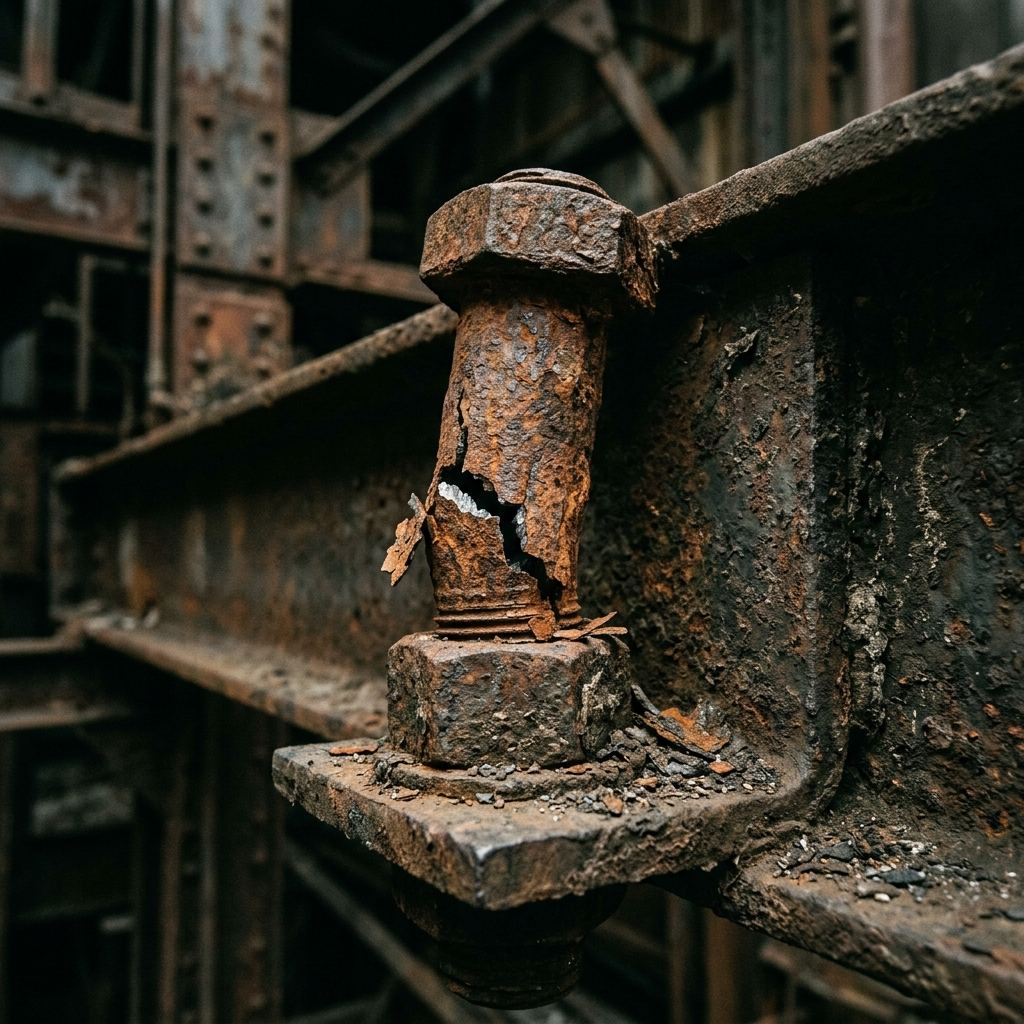
HERO SECTION
Common Metal Painting Mistakes
Why Does Rust Come Back After Painting?
You cleaned the gate.
You painted the railing.
You applied a fresh coat to the steel.
And then, months later—
RUST APPEARS AGAIN.
Why?
Because painting metal is not simply about applying paint.
The result depends on:
A mistake at any stage can reduce coating performance.
Don't Just Paint Metal. Prepare It. Protect It.
Jahan Rust, Wahan FERONIX.
THE BIGGEST METAL PAINTING MISTAKE
MISTAKE #1 — PAINTING WITHOUT PROPER SURFACE PREPARATION
This is one of the most common reasons for premature coating failure.
A metal surface may contain:
- Rust
- Dust
- Dirt
- Oil
- Grease
- Salt
- Moisture
- Loose old paint
- Scale
- Other contaminants
If these remain beneath the coating, they can interfere with adhesion and overall coating performance.
FERONIX PRINCIPLE
PREPARATION COMES BEFORE PROTECTION.
MISTAKE #2 — PAINTING DIRECTLY OVER LOOSE RUST
This is one of the most common misconceptions:
"The paint will seal the rust."
Fresh paint may temporarily hide the corrosion.
But loose rust is not a sound substrate.
The coating may eventually:
- Peel
- Flake
- Crack
- Blister
- Lose adhesion
Correct approach:
MISTAKE #3 — CONFUSING DTM WITH DIRECT-TO-RUST
DTM means:
DIRECT-TO-METAL
It does not mean:
DIRECT-TO-LOOSE-RUST
This is particularly important when using a DTM product such as:
FERONIX CORROX
CORROX is designed for suitable prepared-metal applications.
Appropriate surface preparation remains essential.
MISTAKE #4 — IGNORING OIL & GREASE
Metal surfaces may contain:
- Machine oil
- Grease
- Fingerprints
- Cutting fluids
- Lubricants
- Industrial contamination
A surface can look clean but still contain contaminants.
These can interfere with coating adhesion.
Correct approach:
Clean and degrease the substrate using an appropriate method before coating.
MISTAKE #5 — IGNORING SALT CONTAMINATION
This is especially important in:
- Coastal areas
- Marine environments
- Industrial facilities
- Areas exposed to road salts or chemical contamination
Salt deposits can remain on metal surfaces.
Applying coating without appropriate cleaning can contribute to coating problems.
Remember:
A surface can look clean and still require contamination control.
MISTAKE #6 — PAINTING WET METAL
Moisture is one of the biggest enemies of a coating application.
Problems can occur when coating is applied to:
- Wet steel
- Condensing steel
- Recently washed surfaces
- Surfaces exposed to rain
- Surfaces with trapped moisture
Potential consequences include:
- Poor adhesion
- Blistering
- Coating defects
- Premature failure
Always follow the product's environmental and application requirements.
MISTAKE #7 — IGNORING HUMIDITY AND CONDENSATION
The air may feel dry.
But the steel may still be approaching condensation conditions.
This is particularly important during:
- Monsoon
- Coastal weather
- Early morning
- Evening
- High-humidity environments
FERONIX PRINCIPLE
Check the substrate and environmental conditions—not just the weather forecast.
MISTAKE #8 — USING THE WRONG PRIMER
A primer is not simply "another coat of paint."
It has a specific role within a coating system.
A conventional system may use:
But the selected primer must be compatible with:
- Substrate
- Environment
- Topcoat
- Application conditions
FERONIX CERAMAX
is positioned as the ceramic metal primer within suitable conventional coating systems.
Typical approach:
The exact system should follow the applicable technical documentation.
MISTAKE #9 — USING A RUST CONVERTER AS A SUBSTITUTE FOR PREPARATION
Rust converters can be useful in appropriate applications.
But they should not become an excuse to leave:
- Loose rust
- Heavy scale
- Flaking corrosion
- Unstable material
on the substrate.
FERONIX RUSTCON
is positioned as the:
TREAT
stage.
The correct sequence may be:
MISTAKE #10 — USING RUST REMOVER INCORRECTLY
Rust-removal chemicals need to be used according to their technical instructions.
Important considerations include:
- Surface condition
- Application method
- Contact time
- Rinsing/neutralization requirements where applicable
- Drying
- Subsequent coating requirements
FERONIX RUSTKLEEN
is positioned as:
REMOVE
within the FERONIX surface-protection approach.
MISTAKE #11 — APPLYING TOO MUCH OR TOO LITTLE PAINT
More paint does not automatically mean more protection.
Likewise, insufficient coating thickness can compromise the intended protection.
The correct approach is:
FOLLOW THE SPECIFIED DFT
DFT means:
Dry Film Thickness
Coating thickness should be controlled according to the product's technical requirements.
MISTAKE #12 — IGNORING EDGES, WELDS & CORNERS
Large flat surfaces often receive attention.
But corrosion can begin around:
These areas require appropriate preparation and coating coverage.
MISTAKE #13 — PAINTING OVER PEELING OLD PAINT
Old paint is not automatically a suitable substrate.
If the existing coating is:
- Peeling
- Flaking
- Blistered
- Cracked
- Poorly adhered
simply applying new paint over it can reproduce the underlying failure.
Correct approach:
Assess the existing coating.
Remove unstable material.
Prepare the substrate.
Then apply the appropriate coating system.
MISTAKE #14 — IGNORING THE ENVIRONMENT
The same steel surface can behave differently depending on where it is located.
Compare:
Indoor dry environment
with:
Coastal environment
or:
Chemical industrial environment
or:
Outdoor monsoon exposure
The coating system should be selected based on actual service conditions.
MISTAKE #15 — CHOOSING PAINT ONLY BY PRICE
This is especially important for industrial projects.
The cheapest litre of paint is not necessarily the lowest-cost solution.
Consider:
- Surface preparation
- Number of coats
- Labour
- Downtime
- Recoating
- Maintenance
- Service life
- Corrosion severity
- Product performance requirements
The real question is:
What is the total cost of protection?
MISTAKE #16 — NO MAINTENANCE AFTER PAINTING
Painting is not the end of corrosion protection.
The coating should be periodically inspected.
Look for:
- Scratches
- Rust spots
- Peeling
- Blistering
- Cracking
- Impact damage
- Exposed steel
Early repairs are generally easier than major corrosion restoration.
THE FERONIX WAY
Instead of:
CLEAN → PAINT → FORGET
FERONIX promotes:
INSPECT → CLEAN → PREPARE → REMOVE → TREAT → PRIME / DTM → PROTECT → MAINTAIN
FERONIX 4-PRODUCT CORROSION SOLUTION
STEP 1 — REMOVE
FERONIX RUSTKLEEN
For suitable rust-removal applications.
STEP 2 — TREAT
FERONIX RUSTCON
For suitable residual-rust conversion/treatment applications.
STEP 3 — PRIME
FERONIX CERAMAX
For suitable conventional primer-based systems.
STEP 4 — PROTECT
FERONIX CORROX
SI-PU Direct-to-Metal anti-corrosive coating for suitable prepared-metal applications.
METAL PAINTING: WRONG VS RIGHT
WRONG APPROACH
Rusty Metal
↓
Quick Cleaning
↓
Paint
↓
Wait for Rust
↓
Repaint
↓
Repeat
BETTER APPROACH
Inspect
↓
Clean
↓
Remove unstable corrosion
↓
Treat where appropriate
↓
Select coating system
↓
Apply correctly
↓
Inspect
↓
Maintain
WHY DOES PAINT PEEL FROM METAL?
Paint peeling can have multiple causes.
Potential factors include:
- Poor surface preparation
- Contamination
- Moisture
- Poor adhesion
- Incompatible coatings
- Incorrect application
- Environmental conditions
- Excessive or insufficient coating thickness
- Existing coating failure
Therefore, peeling paint should be treated as a diagnostic problem, not simply a repainting problem.
WHY DOES RUST COME BACK AFTER PAINTING?
If rust returns quickly after painting, investigate:
Was loose rust removed?
Was the surface contaminated?
Was moisture present?
Was the correct coating system selected?
Was the coating compatible?
Was the required DFT achieved?
Were edges and joints properly coated?
Was the substrate suitable?
Was the environment considered?
The answer may not be "bad paint."
It may be:
BAD PREPARATION.
WHY DOES PAINT BLISTER ON METAL?
Blistering can have several causes, including:
- Moisture
- Contamination
- Osmotic effects
- Poor adhesion
- Trapped contaminants
- Application/environmental issues
The exact cause should be diagnosed before recoating.
WHY DOES PAINT CRACK ON STEEL?
Possible contributors include:
- Coating incompatibility
- Excessive film thickness
- Substrate movement
- Environmental exposure
- Aging
- Incorrect application
Again:
Diagnose before repainting.
COMMON MISTAKES ON IRON GATES
Iron gates are among the most commonly repainted metal surfaces.
Common mistakes include:
CORRECT IRON GATE PROCESS
INSPECT
Identify rust and coating damage.
↓
CLEAN
Remove dirt, grease and contamination.
↓
REMOVE
Address loose corrosion.
↓
RUSTKLEEN
Where suitable.
↓
RUSTCON
Where suitable.
↓
CERAMAX
If a primer-based system is required.
For suitable DTM applications.
↓
INSPECT & MAINTAIN
COMMON MISTAKES ON BALCONY RAILINGS
Railings are exposed to:
- Rain
- Humidity
- Dust
- Salt
- UV exposure
Common problem areas:
- Welds
- Base plates
- Corners
- Fasteners
- Bottom sections
Inspect these areas carefully before repainting.
COMMON INDUSTRIAL PAINTING MISTAKES
Industrial projects introduce additional risks.
For industrial applications, the coating specification and project requirements should always take priority.
COASTAL PAINTING MISTAKES
Coastal steel requires additional attention.
Common mistakes:
Read more:
Coastal Corrosion Protection
MONSOON PAINTING MISTAKES
During monsoon, common problems include:
- Rain exposure
- High humidity
- Condensation
- Wet substrate
- Slow drying
- Trapped moisture
Therefore:
Never treat monsoon coating work like dry-season painting.
Environmental conditions should meet the product requirements before application.
A SIMPLE METAL PAINTING CHECKLIST
Before painting:
SURFACE
☐ Is the metal dry?
☐ Is loose rust removed?
☐ Is old peeling paint removed?
☐ Is oil/grease removed?
☐ Is salt contamination considered?
ENVIRONMENT
☐ Temperature acceptable?
☐ Humidity acceptable?
☐ Condensation risk controlled?
☐ Rain protection available?
PRODUCT
☐ Correct product?
☐ Correct system?
☐ Compatibility confirmed?
☐ TDS reviewed?
APPLICATION
☐ Correct application method?
☐ Correct DFT?
☐ Correct recoat interval?
☐ Adequate coverage?
THE 5 QUESTIONS TO ASK BEFORE PAINTING METAL
Before picking up a brush, ask:
What condition is the metal in?
What contaminants are present?
What preparation does it need?
What coating system is appropriate?
What environment will the metal operate in?
These five questions can prevent many coating problems.
FERONIX CORROX — DON'T SKIP PREPARATION
CORROX is a DTM product.
That means:
DIRECT-TO-METAL
But the metal should still be appropriately:
before coating.
FERONIX CERAMAX — WHEN PRIMER IS REQUIRED
If the selected system requires a conventional primer:
CERAMAX
provides the primer stage.
The basic concept:
This is different from the DTM approach.
FERONIX RUSTKLEEN — DON'T JUST COVER RUST
When rust removal is appropriate:
RUSTKLEEN
can be part of the preparation process.
The objective is:
REMOVE
rather than simply:
HIDE
FERONIX RUSTCON — TREAT, DON'T IGNORE
Where suitable residual rust remains after preparation:
RUSTCON
can form part of the treatment stage.
But remember:
CONVERSION ≠ MAGIC
Loose and unstable corrosion still needs appropriate preparation.
WHY FERONIX?
Most metal-painting advice starts with:
"Which paint should I use?"
FERONIX starts earlier:
"What condition is the surface in?"
That difference is important.
Because the correct solution may involve:
RUSTKLEEN
before
RUSTCON
before
CERAMAX
or
CORROX
depending on the surface and coating system.
FERONIX METAL PAINTING PHILOSOPHY
DON'T PAINT THE PROBLEM.
- Poor preparation
- Painting over loose rust
- Confusing DTM with direct-to-rust
- Ignoring oil/grease
- Ignoring salt
- Painting wet metal
- Ignoring humidity
- Wrong primer
- Misusing rust converter
- Misusing rust remover
- Wrong DFT
- Ignoring edges/welds
- Painting over failing old paint
- Ignoring environment
Frequently Asked Questions
What is the most common mistake when painting metal?
Poor surface preparation is one of the most common causes of premature coating problems.
Can I paint directly over rust?
Loose and unstable rust should not simply be painted over. Appropriate surface preparation is required.
Why does rust come back after painting?
Rust can return because of inadequate preparation, contamination, moisture, unsuitable coating selection, application problems or coating damage.
Why does paint peel from metal?
Possible causes include poor adhesion, contamination, moisture, incompatible coatings and incorrect application.
Do I need primer before painting steel?
It depends on the coating system. Conventional systems may require a primer, while suitable DTM products such as CORROX can be applied directly to appropriately prepared metal.
Is CORROX a primer?
No. CORROX is a Direct-to-Metal anti-corrosive coating. CERAMAX is FERONIX's metal primer.
Can CORROX be applied directly over rust?
CORROX is DTM, not direct-to-loose-rust. Appropriate surface preparation is required.
What is the purpose of RUSTKLEEN?
RUSTKLEEN is positioned as the rust-removal stage for suitable applications.
What is the purpose of RUSTCON?
RUSTCON is positioned as the rust-treatment/conversion stage for suitable residual-rust conditions.
Can rust converter replace rust removal?
Not necessarily. Loose or unstable corrosion should be appropriately addressed before conversion treatment.
Why is surface preparation important?
It removes contaminants and unstable material and provides a suitable substrate for the coating system.
Should I paint wet metal?
No coating should be applied to a wet or unsuitable substrate. Follow the product's environmental requirements.
Is more paint better?
Not necessarily. The specified dry film thickness should be followed.
Why do edges rust first?
Edges can be difficult to coat uniformly and may receive inadequate coating coverage if not properly prepared and coated.
Can I paint over old paint?
Only if the existing coating is sound and compatible with the new system. Peeling or poorly adhered coating should be addressed.
Can I paint during monsoon?
Only when substrate and environmental conditions meet the product and project requirements.
How can I make painted metal last longer?
Use proper surface preparation, a suitable coating system, correct application and regular inspection/maintenance.
Why Does Paint Peel From Metal?
Why Does Rust Come Back After Painting?
Can You Paint Directly Over Rust?
Why Does Paint Blister on Steel?
Why Does Paint Crack on Metal?
DTM vs Primer: Which Metal Coating System Should You Use?
Can Rust Converter Replace Rust Removal?
Stop Repainting the Same Rust.
If rust keeps coming back, the problem may not be the colour.
It may be:
Preparation.
Contamination.
Moisture.
Coating selection.
Application.
Maintenance.
FERONIX helps you approach the problem systematically.
RUSTKLEEN
REMOVE
RUSTCON
TREAT
CERAMAX
PRIME
CORROX
PROTECT
Jahan Rust, Wahan FERONIX.
Protecting Every Surface.
Strategic SEO Positioning for Part 14
This page is particularly valuable because it can capture people after they already have a problem.
The SEO journey should look like:
"Why does my paint peel?"
↓
"Why does rust come back?"
↓
"How should I prepare metal?"
↓
"What primer/coating should I use?"
↓
FERONIX
And the core message throughout the page should remain:
THE PROBLEM IS OFTEN NOT THE PAINT.
THE PROBLEM STARTS WITH THE SURFACE.
That makes Part 14 an important problem-solving + product-conversion page in the FERONIX SEO cluster.