
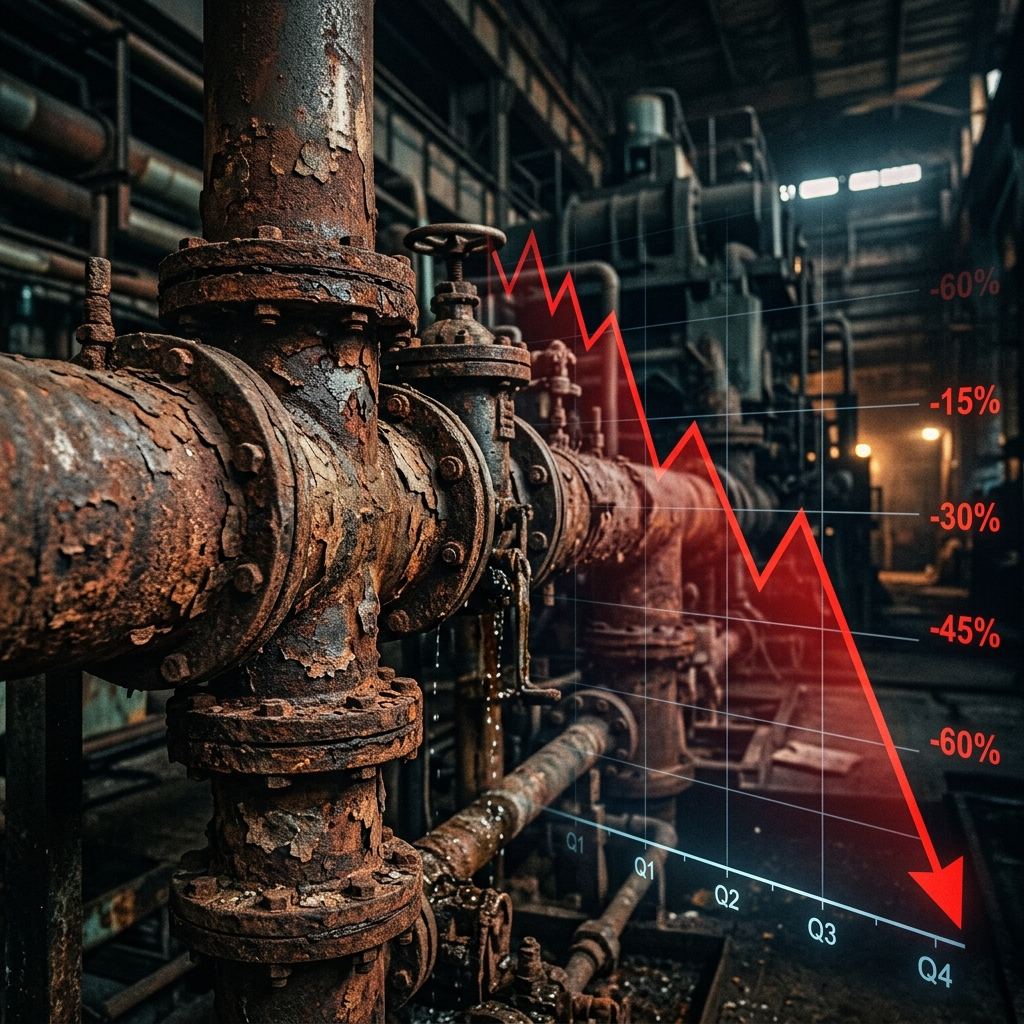
HERO SECTION
What Does Rust Really Cost?
The Cost of Ignoring Corrosion Is Often More Than the Cost of Protecting the Metal.
Rust may begin as:
A small orange spot.
Then:
A patch.
Then:
Flaking paint.
Then:
Pitting.
And eventually:
Major repair or replacement.
The visible rust may be small.
But the cost of ignoring it can grow over time.
Don't Wait for Rust to Become a Repair Bill.
Jahan Rust, Wahan FERONIX.
THE REAL COST OF CORROSION
When people think about rust, they usually think about:
Paint
But corrosion can create costs across several areas.
Therefore:
The cost of corrosion is bigger than the cost of paint.
SMALL RUST vs BIG CORROSION
STAGE 1
SMALL RUST SPOT
Potential response:
Inspection + local preparation + protective coating.
↓
STAGE 2
WIDESPREAD SURFACE CORROSION
Potential response:
More extensive preparation + treatment/coating.
↓
STAGE 3
DEEP PITTING
Potential response:
Detailed assessment + extensive repair/preparation.
↓
STAGE 4
SECTION LOSS / PERFORATION
Potential response:
Repair or replacement may be required.
THE CORROSION COST CYCLE
Use this as one of the main graphics.
Compare that with:
COST #1 — MORE SURFACE PREPARATION
Early corrosion may require relatively localized preparation.
When corrosion becomes extensive, preparation can become more demanding.
You may need:
- Mechanical cleaning
- Abrasive preparation
- Chemical treatment
- Removal of old coating
- Rust scale removal
- Additional cleaning
- More labour
The longer corrosion is ignored:
the more preparation may be required.
COST #2 — MORE PAINT & MATERIAL
A small corrosion problem may require localized repair.
A larger corrosion problem can require:
- More coating
- More primer
- More rust treatment
- More thinner/cleaning materials where applicable
- More consumables
This increases material consumption.
COST #3 — LABOUR
Labour can become one of the largest components of corrosion maintenance.
Consider:
Small repair
vs.
Full surface restoration
The second may require:
- More workers
- More preparation
- More coats
- More inspection
- More curing time
- More access equipment
Therefore:
Ignoring corrosion can turn a small maintenance task into a larger labour project.
COST #4 — ACCESS & EQUIPMENT
Industrial corrosion maintenance may require access equipment such as:
- Scaffolding
- Ladders
- Lifting equipment
- Platforms
- Safety systems
- Rope access in appropriate applications
If the structure is difficult to access, maintenance costs can increase significantly.
This is why:
Early inspection matters.
COST #5 — DOWNTIME
For industrial facilities, corrosion can become an operational issue.
Maintenance may require:
- Equipment shutdown
- Production interruption
- Restricted access
- Temporary isolation
- Additional manpower
The cost isn't only:
"How much will the coating cost?"
It can also be:
"How much will it cost to stop operations?"
COST #6 — REPAIR
If corrosion progresses beyond the coating stage, metal repair may become necessary.
Depending on the component, this can involve:
- Welding
- Plate replacement
- Section repair
- Fastener replacement
- Component replacement
At this stage, the problem is no longer simply:
"Which anti-corrosive paint should I use?"
It becomes:
"How much of the metal needs to be repaired?"
COST #7 — REPLACEMENT
In severe cases, replacement may be more practical than restoration.
For example:
Rusty metal furniture
may require replacement.
But:
Severely deteriorated structural steel
may involve much more significant engineering and project costs.
The exact decision depends on the condition and application.
COST #8 — MAINTENANCE FREQUENCY
Poor corrosion control can lead to repeated maintenance cycles.
This creates a recurring expense.
The goal of a good corrosion-protection strategy is not simply:
Paint once.
It is:
Manage corrosion systematically.
COST #9 — PREMATURE COATING FAILURE
A coating can fail earlier than expected because of:
- Poor surface preparation
- Wrong coating selection
- Contamination
- Moisture
- Incorrect DFT
- Application errors
- Environmental exposure
- Mechanical damage
When a coating fails prematurely, the cost of the original coating work is not necessarily recovered.
You may need to:
COST #10 — REPUTATION & APPEARANCE
Not every corrosion cost is industrial.
Rust can also affect the appearance of:
- Buildings
- Gates
- Railings
- Shops
- Factories
- Agricultural equipment
- Commercial properties
A rusted surface can create an impression of:
- Poor maintenance
- Neglect
- Age
- Lack of care
For businesses, appearance can matter.
COST #11 — ASSET LIFE
Corrosion can contribute to deterioration of metal components.
Protecting the surface appropriately can help support asset maintenance.
But remember:
Coating cannot restore metal that has already been lost.
If corrosion has caused significant section loss or structural damage, engineering assessment and repair may be necessary.
COST #12 — SAFETY & STRUCTURAL RISK
This is one of the most important sections.
Corrosion can affect components such as:
- Structural steel
- Handrails
- Platforms
- Stairs
- Supports
- Tanks
- Pipelines
- Equipment
Severe deterioration can become a safety concern.
Important:
FERONIX coating products are corrosion-protection solutions.
They are not substitutes for structural inspection, engineering assessment or repair where structural integrity has been compromised.
THE "CHEAP PAINT" MISTAKE
A common decision is:
"Let's use the cheapest paint."
But the purchase price of the coating is only one part of the project cost.
Consider:
=
TOTAL COST OF CORROSION PROTECTION
TOTAL COST OF OWNERSHIP
This section should be strongly optimized for B2B SEO.
Don't Compare Paint Prices.
Compare the Total Cost of Ownership.
A coating system should be evaluated based on:
- Preparation requirements
- Product quantity
- Application cost
- Labour
- Expected maintenance
- Recoat requirements
- Environmental exposure
- Accessibility
- Downtime
A lower initial purchase price does not automatically mean a lower lifecycle cost.
SIMPLE EXAMPLE — IRON GATE
Suppose a gate develops a small rust spot.
OPTION A
Ignore it.
↓
Rust spreads.
↓
More preparation.
↓
More coating.
↓
More labour.
↓
More repainting.
OPTION B
Identify it early.
↓
Clean.
↓
Remove corrosion.
↓
Treat where appropriate.
↓
Protect.
↓
Inspect periodically.
The principle:
Small maintenance today can prevent larger maintenance tomorrow.
Don't present this as a guaranteed monetary saving; actual costs vary by surface and location.
SIMPLE EXAMPLE — INDUSTRIAL STRUCTURE
Consider a steel structure with early coating deterioration.
Early stage
Localized preparation and repair may be possible.
Later stage
Larger areas require:
- More access
- More preparation
- More coating
- More labour
- More inspection
Severe stage
Potential:
- Metal repair
- Component replacement
- Operational interruption
Therefore:
Corrosion monitoring is part of asset management.
SIMPLE EXAMPLE — AGRICULTURAL EQUIPMENT
Agricultural equipment faces:
- Water
- Mud
- Fertilizer
- Chemicals
- Soil
- Outdoor exposure
Ignoring early corrosion can make restoration more difficult.
Regular inspection helps identify:
- Scratches
- Rust spots
- Peeling coating
- Exposed metal
before the problem becomes extensive.
SIMPLE EXAMPLE — COASTAL METAL
Coastal environments deserve special attention because salt-containing moisture can accelerate corrosion processes.
Typical vulnerable assets:
- Gates
- Railings
- Fencing
- Steel structures
- Equipment
A suitable corrosion-protection and maintenance strategy becomes especially important.
SIMPLE EXAMPLE — MONSOON EXPOSURE
Monsoon conditions can increase exposure to:
- Rainwater
- Humidity
- Moisture
- Condensation
Metal surfaces with damaged coatings can become vulnerable.
Inspect before:
Small rust spot → larger corrosion problem
THE COST PYRAMID
Create a visual pyramid:
Highest potential cost
↓
The message:
Preventive maintenance generally gives you more options than emergency repair.
CORROSION COST IS NOT JUST MONEY
There are four major categories.
💰 FINANCIAL
Repair + coating + replacement
⏱ TIME
Downtime + maintenance
🏭 OPERATIONAL
Production interruption + access restrictions
🛡 RISK
Asset condition + potential safety concerns
WHEN SHOULD YOU TAKE RUST SERIOUSLY?
Pay attention when you see:
THE EARLIER YOU IDENTIFY IT, THE MORE OPTIONS YOU HAVE
EARLY CORROSION
More localized solutions may be possible.
↓
DEVELOPING CORROSION
More preparation may be required.
↓
ADVANCED CORROSION
Repair may become necessary.
↓
SEVERE DETERIORATION
Replacement or structural intervention may be required.
Don't wait for the metal to tell you twice.
FERONIX'S APPROACH TO COST CONTROL
FERONIX should not position itself as simply:
"Buy our paint."
Instead:
Identify the right protection approach for the condition of the metal.
That can mean:
The appropriate combination depends on the substrate and project requirements.
FERONIX RUSTKLEEN
REMOVE BEFORE THE PROBLEM GROWS
Where rust removal is appropriate, RUSTKLEEN is positioned as the REMOVE stage.
The objective is to address corrosion during surface preparation rather than simply hiding it beneath fresh paint.
FERONIX RUSTCON
TREAT SUITABLE RESIDUAL RUST
RUSTCON is positioned as the TREAT stage for suitable residual-rust conditions.
It should be used according to the applicable technical requirements.
Remember:
Rust conversion is not a replacement for removing loose corrosion.
FERONIX CERAMAX
PRIME WHEN THE SYSTEM REQUIRES IT
CERAMAX is FERONIX's ceramic metal primer.
Suitable conventional system:
This gives the user a clear alternative to a DTM system where the application calls for a primer.
FERONIX CORROX
is an SI-PU Direct-to-Metal anti-corrosive coating for suitable prepared-metal applications.
The concept is:
DTM does not mean:
"Apply over loose rust."
FERONIX CORROSION PROTECTION SYSTEM
Create a prominent diagram:
HOMEOWNER VERSION
For homeowners:
Don't wait until:
- Your gate is heavily rusted
- Your railing starts flaking
- Your fence develops holes
- Your outdoor furniture deteriorates
Instead:
Inspect regularly.
Repair early.
Protect properly.
INDUSTRIAL VERSION
For industries:
Corrosion management should be integrated into asset maintenance.
Monitor:
- Steel structures
- Machinery
- Pipelines
- Tanks
- Platforms
- Supports
- Equipment
Document:
- Condition
- Coating system
- DFT where required
- Inspection dates
- Repair areas
- Maintenance history
CORROSION COST CALCULATOR CONCEPT
This page could eventually include an interactive calculator.
Input:
Surface Area: ______ m²
Current Condition:
○ Minor rust
○ Moderate corrosion
○ Heavy corrosion
○ Severe deterioration
Environment:
○ Indoor
○ Outdoor
○ Coastal
○ Industrial
○ Agricultural
Output:
Instead of promising an exact cost, show:
"Your corrosion risk and maintenance complexity may increase as surface deterioration progresses. Contact FERONIX for a project-specific coating recommendation."
This avoids misleading visitors with an unrealistic generic cost calculation.
"WHAT IS YOUR CORROSION COST?"
Use a CTA:
Calculate the Cost of Waiting
Ask the visitor:
How large is the metal surface?
Where is it located?
How severe is the rust?
How old is the coating?
Is the metal exposed outdoors?
Is it coastal?
Is it industrial?
Then:
Get a FERONIX Protection Recommendation
Frequently Asked Questions
What is the cost of corrosion?
The cost of corrosion includes more than the coating itself. It can include inspection, surface preparation, labour, repair, replacement, downtime and maintenance.
Why is corrosion expensive?
As corrosion progresses, more extensive preparation, repair or replacement may be required.
Is it cheaper to prevent rust than repair it?
Preventive corrosion management can provide more maintenance options and may reduce the need for extensive repairs, but actual costs depend on the asset, environment and corrosion severity.
Does painting stop corrosion?
A properly selected and applied protective coating can help protect metal from environmental exposure, but coating performance depends heavily on surface preparation, application and maintenance.
Can anti-corrosive paint repair rusted metal?
Coatings protect suitable substrates but cannot replace metal already lost through severe corrosion.
When should I repaint rusty metal?
It depends on the condition of the substrate and coating. Early inspection is recommended when rust spots, peeling, blistering or exposed metal appear.
Is rust removal cheaper than replacing metal?
It depends on the severity of corrosion and the condition of the substrate. Early-stage surface corrosion may be manageable through preparation and coating, while severe metal loss may require repair or replacement.
What is the cost of ignoring rust?
There is no single fixed cost. It depends on the surface, environment, corrosion severity, accessibility and required repair.
Does coastal corrosion cost more?
It can require more frequent inspection and maintenance because salt-containing environments can be more aggressive toward metal.
Does monsoon increase corrosion risk?
Repeated moisture exposure can increase corrosion risk, especially where protective coatings are damaged.
What is the cheapest way to prevent rust?
There is no universal cheapest solution. The appropriate solution depends on the substrate, environment, corrosion condition and required service performance.
Is FERONIX CORROX a primer?
No. CORROX is a Direct-to-Metal anti-corrosive coating. CERAMAX is FERONIX's metal primer.
Does CORROX require a primer?
CORROX is designed for suitable DTM applications, so a separate primer is not necessarily required. Follow the applicable technical requirements.
Can RUSTCON replace RUSTKLEEN?
They serve different roles. RUSTKLEEN is positioned for rust removal, while RUSTCON is positioned for suitable rust-treatment/conversion applications.
Can FERONIX protect heavily damaged steel?
FERONIX coatings can protect suitable prepared metal surfaces. Severely deteriorated or structurally compromised steel may require repair or professional engineering assessment before coating.
How Much Does Rust Cost to Repair?
Rust Removal vs Metal Replacement: What Should You Choose?
How Much Is Rust Costing You?
Maybe you are spending money on: