What Is the Difference?
If you see rust on iron or steel, the first question is often:
“Should I remove the rust or convert it?”
These are two different approaches.
Rust Removal
The objective is to remove corrosion products from the metal surface.
Rust Conversion
The objective is to chemically treat suitable remaining rust and convert it into a more stable form according to the converter's chemistry and instructions.
In simple terms:
RUSTKLEEN → REMOVE
RUSTCON → TREAT
They are not interchangeable products.
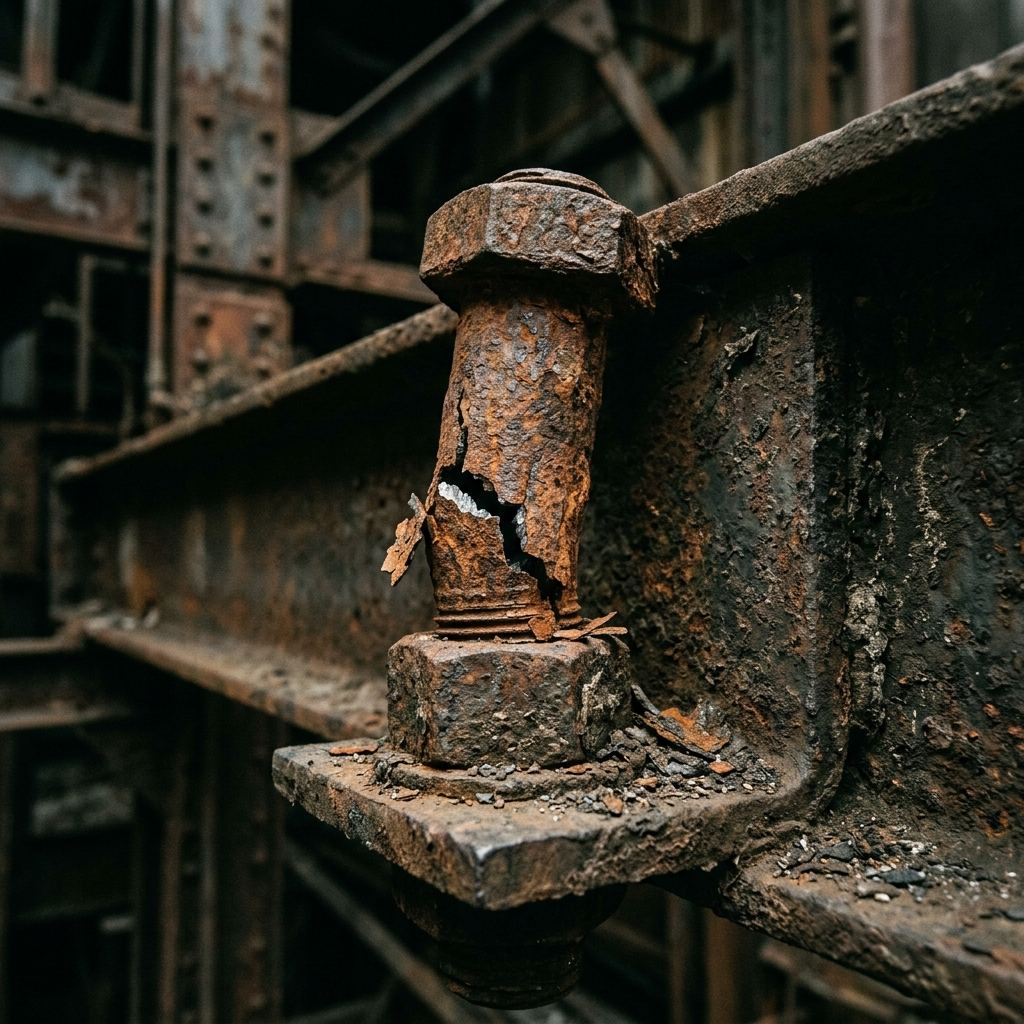
Why Does Rust Need to Be Addressed Before Painting?
Rust is not simply a colour on the surface.
It is the result of corrosion of iron-containing metal.
If corrosion products are:
- Loose
- Flaking
- Scaled
- Unstable
simply covering them with paint may leave an unstable layer underneath the coating.
That can contribute to:
- Poor adhesion
- Peeling
- Blistering
- Rust recurrence
- Premature coating failure
Therefore, before applying a protective coating, the surface should be properly assessed and prepared.
Rust Removal vs Rust Conversion at a Glance
What Is Rust Removal?
Rust removal is the process of removing corrosion products from the surface of metal.
Depending on the substrate and condition, rust can be removed using:
- Mechanical methods
- Abrasive methods
- Chemical methods
- A combination of methods
The objective is to create a suitable surface for the next stage of protection.
FERONIX RUSTKLEEN is positioned as the FERONIX solution for suitable rust-removal applications.
Its role in the FERONIX corrosion-protection sequence is:
REMOVE
RUSTKLEEN is therefore relevant when the objective is to address and remove corrosion rather than simply treating remaining rust.
When Should Rust Removal Be Considered?
Rust removal may be appropriate when:
- Rust is loose
- Rust is flaky
- Corrosion has formed scale
- The surface needs to be prepared for coating
- Existing corrosion products are unstable
- A clean/prepared substrate is required
The exact preparation method depends on the substrate and selected coating system.
What Is Rust Conversion?
Rust conversion is a chemical treatment process designed to react with suitable remaining rust and convert it into a more stable form.
It does not mean that the rust physically disappears.
Instead, the converter reacts with suitable corrosion products according to its chemistry.
This can be useful where complete mechanical removal of all corrosion is difficult or impractical.
FERONIX RUSTCON is positioned as the FERONIX solution for suitable rust conversion/treatment applications.
Its role is:
TREAT
RUSTCON is therefore different from RUSTKLEEN.
Does Rust Conversion Remove Rust?
Not in the same sense as a rust remover.
This is an important distinction.
Rust Removal
The corrosion product is removed from the substrate.
Rust Conversion
Suitable remaining rust is chemically reacted with and converted into a more stable form.
Therefore:
Rust conversion is not simply another name for rust removal.
Which Is Better: Rust Remover or Rust Converter?
There is no universal winner.
The right choice depends on:
- Rust condition
- Thickness of corrosion
- Accessibility
- Surface preparation requirements
- Selected coating system
- Project requirements
Think about the problem first.
If the objective is:
“I need to remove this corrosion.”
Consider a suitable rust-removal process.
If the objective is:
“I have suitable residual rust that needs chemical treatment.”
A rust converter may be appropriate.
When Should You Remove Rust?
Rust removal should be strongly considered when corrosion is:
- Loose
- Flaking
- Powdery
- Scaled
- Thick
- Mechanically unstable
These forms of corrosion can provide a poor foundation for a protective coating.
When Can Rust Conversion Be Useful?
Rust conversion can be useful where:
- Suitable rust remains after preparation
- Complete removal is difficult
- The converter is specifically designed for the substrate
- The coating system allows the treatment
- The product instructions permit the application
The surface still needs to be properly prepared.
Rust Converter Is Not a Shortcut
One of the biggest misconceptions is:
“I can spray rust converter on everything and paint over it.”
That is not a good general approach.
Before using a rust converter, address:
- Dirt
- Oil
- Grease
- Loose rust
- Loose scale
- Unstable paint
- Other contaminants
Then apply the converter according to its technical instructions.
FERONIX Approach to Rust
FERONIX takes a simple four-stage approach:
REMOVE
RUSTKLEEN
Address suitable corrosion-removal requirements.
↓
TREAT
RUSTCON
Treat suitable remaining rust.
↓
PRIME
CERAMAX
Use where a dedicated metal primer is required.
↓
PROTECT
CORROX
Use where a suitable SI-PU DTM anti-corrosive coating is specified.
This gives FERONIX a complete surface-protection story.
Can You Use RUSTKLEEN and RUSTCON Together?
They should not automatically be treated as mandatory sequential products.
They perform different functions.
The correct sequence depends on:
- Rust condition
- Product chemistry
- Surface condition
- Technical instructions
- Final coating system
In some situations, rust may primarily require removal.
In others, suitable residual rust may require conversion.
The product TDS should determine the appropriate procedure.
Can RUSTCON Replace RUSTKLEEN?
Not automatically.
If the requirement is to remove corrosion products, a converter is not simply a replacement for a remover.
Select the product based on the actual surface condition.
Can RUSTKLEEN Replace RUSTCON?
Again, not automatically.
Removing corrosion and converting suitable remaining rust are different objectives.
A rust-removal process does not necessarily provide the same function as a rust converter.
Rust Removal Before Painting
A typical rust-removal process may look like:
STEP 1
Inspect the surface.
STEP 2
Clean contaminants.
STEP 3
Remove loose rust.
STEP 4
Apply the appropriate rust-removal method where required.
STEP 5
Prepare the surface for coating.
STEP 6
Select the appropriate coating system.
STEP 7
Apply primer or DTM coating according to the specification.
Rust Conversion Before Painting
A typical rust-conversion process may look like:
STEP 1
Inspect the corrosion.
STEP 2
Clean the surface.
STEP 3
Remove loose rust and unstable corrosion.
STEP 4
Apply suitable rust converter.
STEP 5
Allow the chemical reaction/treatment to proceed according to the product instructions.
STEP 6
Prepare the treated surface as required.
STEP 7
Apply the specified primer or DTM coating.
Rust Removal + Primer System
For a conventional coating system, the process may be:
Rust Conversion + Primer System
Where suitable:
The actual procedure must follow the relevant product instructions.
Rust Removal + DTM System
For a suitable DTM approach:
This can provide a simplified coating approach where the CORROX specification permits direct application.
Rust Conversion + DTM System
Where suitable:
Again, the treated surface must meet the requirements of the selected DTM coating before application.
Rust Removal vs Rust Conversion for Iron Gates
Iron gates are exposed to:
- Rain
- Humidity
- Sunlight
- Dust
- Scratches
- Water accumulation
Rust commonly develops around:
- Welds
- Hinges
- Corners
- Bottom sections
- Joints
Light Rust
Surface preparation may be sufficient.
Loose Rust
Removal should be considered.
Suitable Remaining Rust
Conversion may be considered.
After Preparation
Use:
CERAMAX for a specified primer system
or
CORROX for a suitable DTM system.
Rust Removal vs Rust Conversion for Window Grills
Window grills commonly develop surface corrosion around welds and joints.
A practical decision process:
Railings are exposed to repeated weather cycles.
If rust is:
Loose
Remove it.
Stable but difficult-to-remove residual rust
Consider suitable conversion treatment.
After preparation
Select the appropriate protective coating system.
Rust Removal vs Rust Conversion for Boundary Fencing
Boundary fences often have extensive surface area.
The correct approach should consider:
- Rust severity
- Fence material
- Accessibility
- Existing paint
- Ground-contact areas
- Exposure
For larger fencing projects, mechanical preparation and coating specifications should be established before selecting the treatment method.
Rust Removal vs Rust Conversion for Steel Structures
For structural steel, this decision becomes more important.
Heavy corrosion can involve:
- Deep pitting
- Section loss
- Rust scale
- Weld corrosion
- Crevice corrosion
A coating does not restore metal that has already been lost.
If corrosion appears structurally significant, the steel should be professionally assessed.
Rust Removal vs Rust Conversion for Machinery
Machinery may have additional contaminants:
- Oil
- Grease
- Hydraulic fluids
- Chemicals
- Dust
These must be considered before corrosion treatment.
A rust converter should not be applied over an oily surface.
Rust Removal vs Rust Conversion for Agricultural Equipment
Agricultural equipment may have:
- Mud
- Fertilizer residues
- Chemicals
- Oil
- Grease
Cleaning is therefore particularly important.
After appropriate preparation, select the rust-removal or rust-conversion process based on the corrosion condition.
Rust Removal vs Rust Conversion in Coastal Areas
Coastal environments can introduce salt contamination.
The surface may look relatively clean but still contain salt residues.
Before rust treatment:
Clean thoroughly.
Then:
Remove or treat corrosion as appropriate.
Then:
Apply the selected coating system.
For coastal projects, the final coating specification should account for the exposure severity.
Rust Removal vs Rust Conversion During Monsoon
Monsoon creates additional challenges:
- High humidity
- Wet surfaces
- Condensation
- Rain
- Slow drying
The substrate must be suitable for treatment/coating.
Do not apply rust treatment or protective coating simply because the rain has stopped.
Check the actual substrate and environmental conditions.
What Happens If You Only Convert Rust?
If loose corrosion remains, converting only the surface may not solve the underlying problem.
The unstable corrosion should first be appropriately addressed.
Therefore:
Don't think:
Rust → Converter → Paint
Instead think:
Inspect → Clean → Prepare → Treat suitable rust → Protect
What Happens If You Only Remove Rust?
Rust removal can produce a suitable substrate, but corrosion protection is still required.
After rust removal:
Prepared Metal → Protective Coating
Without a suitable protective coating, bare steel can begin corroding again when exposed to moisture and oxygen.
This is why rust removal is only one stage of corrosion protection.
Rust Removal Is Not Rust Protection
This distinction is extremely important.
It addresses the corrosion-removal stage.
It addresses suitable remaining rust.
It provides the protective coating stage for suitable applications.
Therefore:
Removing rust is not the same as protecting metal from future corrosion.
Rust Converter Is Not a Final Protective Coating
A converter performs a treatment function.
It should not automatically be considered the final corrosion-protection layer.
After treatment, the surface may require an appropriate protective coating according to the system specification.
This is where products such as:
FERONIX CERAMAX
or
FERONIX CORROX
may become relevant depending on the coating system.
The Complete FERONIX Corrosion Protection Logic
This gives FERONIX a very clear market position:
Don't Just Paint Rust. Understand It. Treat It. Protect the Metal.
How to Choose the Right FERONIX Product
This should also become a useful internal sales guide for FERONIX dealers.
A Simple Decision Tree
Is the rust loose or unstable?
YES → Prepare/remove it
↓
Is rust removal required?
YES → RUSTKLEEN
↓
Is suitable residual rust still present?
YES → RUSTCON where appropriate
↓
Does the coating system require a primer?
YES → CERAMAX
↓
Is a DTM system technically suitable?
YES → CORROX
↓
Never assume paint will fix loose rust.
Never confuse rust removal with rust conversion.
Never assume rust converter eliminates the need for preparation.
Never assume DTM means direct-to-rust.
Never skip the final protective coating.
Common Rust Treatment Mistakes
Mistake 1 — Using a Rust Converter as a Rust Remover
Problem: Different functions.
Better approach: Select according to the actual corrosion condition.
Mistake 2 — Applying Converter Over Oil
Problem: The treatment may not contact the rust properly.
Better approach: Clean the surface first.
Mistake 3 — Leaving Loose Rust Under the Coating
Problem: Unstable material remains beneath the coating.
Better approach: Remove unstable corrosion first.
Mistake 4 — Treating Every Rusty Surface the Same
Problem: Rust severity varies.
Better approach: Inspect first.
Mistake 5 — Treating Rust but Not Protecting the Metal
Problem: Corrosion can return.
Better approach: Follow treatment with an appropriate coating system.
The FERONIX Four-Product Corrosion Strategy
This is an important section for SEO and brand positioning.
Rust removal solution for suitable applications.
Rust converter for suitable remaining rust.
Ceramic metal primer for suitable primer-based coating systems.
SI-PU Direct-to-Metal anti-corrosive coating for suitable prepared metal.
Why This Makes FERONIX Different
Many customers think:
“I need anti-rust paint.”
But the real corrosion problem can have several stages.
FERONIX approaches it as:
Surface → Corrosion → Treatment → Coating → Protection
Instead of simply:
Rust → Paint
This gives FERONIX a stronger technical position in the metal-protection market.
Frequently Asked Questions
What is the difference between rust removal and rust conversion?
Rust removal aims to remove corrosion products, while rust conversion chemically treats suitable remaining rust and converts it into a more stable form.
Is rust converter better than rust remover?
Neither is universally better. The appropriate product depends on the condition of the rust and the required surface-preparation process.
What is FERONIX RUSTKLEEN used for?
FERONIX RUSTKLEEN is positioned as a rust-removal solution for suitable applications.
What is FERONIX RUSTCON used for?
FERONIX RUSTCON is positioned as a rust converter for suitable remaining rust.
Can rust converter remove rust?
Not in the same way as a rust remover. A converter chemically treats suitable rust rather than simply removing the corrosion products.
Should I remove loose rust before using a rust converter?
Yes, loose and unstable corrosion should be appropriately addressed before applying a rust converter.
Can I paint immediately after rust conversion?
Not necessarily. Follow the converter's specified reaction, drying and subsequent-surface requirements before applying the next coating.
Does rust converter replace primer?
Not automatically. A rust converter and primer have different functions.
Do I need a protective coating after rust removal?
Generally, bare prepared metal needs appropriate protection against subsequent corrosion. The selected coating system should determine the next step.
Can RUSTKLEEN and RUSTCON be used together?
Not automatically. They perform different functions. Their use and sequence should be determined according to the surface condition and product instructions.
Can I use RUSTCON on heavy loose rust?
Heavy loose rust should first be appropriately removed or addressed. A converter should not be treated as a substitute for removing unstable corrosion.
Can I use RUSTKLEEN on every metal?
Product suitability depends on the substrate and application. Always check the product technical documentation.
Can rust conversion be used on iron gates?
It may be suitable for appropriate rust conditions. Prepare the gate and follow the RUSTCON application instructions.
Can rust removal be used on steel structures?
Rust-removal methods can be used on steel, but large structural projects require appropriate preparation standards and coating specifications.
What comes after rust removal?
After suitable preparation, the next stage is usually an appropriate protective coating system, which may include a primer or DTM coating depending on the specification.
What comes after rust conversion?
After the treatment has completed according to the product instructions, the surface can proceed to the specified protective coating system.
Can FERONIX CORROX be applied after RUSTKLEEN?
Potentially, where the surface has been appropriately prepared and meets the CORROX application requirements.
Can FERONIX CORROX be applied after RUSTCON?
Potentially, where the treated surface meets the CORROX technical requirements and the specified procedure is followed.
Can I use CERAMAX after RUSTCON?
Potentially, where the treated surface is suitable and the primer-based coating system permits it.
Why Does Metal Rust?
Anchor text:
Why Is Primer Required?
Anchor text:
Rust Removal Is Only the Beginning.
Removing rust doesn't mean the metal is protected.
Converting suitable remaining rust doesn't mean the job is finished.
The final objective is:
PREPARE → TREAT → PROTECT
With FERONIX:
RUSTKLEEN
REMOVE
RUSTCON
TREAT
CERAMAX
PRIME
CORROX
PROTECT
From the first sign of corrosion to long-term surface protection, choose the right solution for the right stage.
Jahan Rust, Wahan FERONIX.
FERONIX — Protecting Every Surface.