
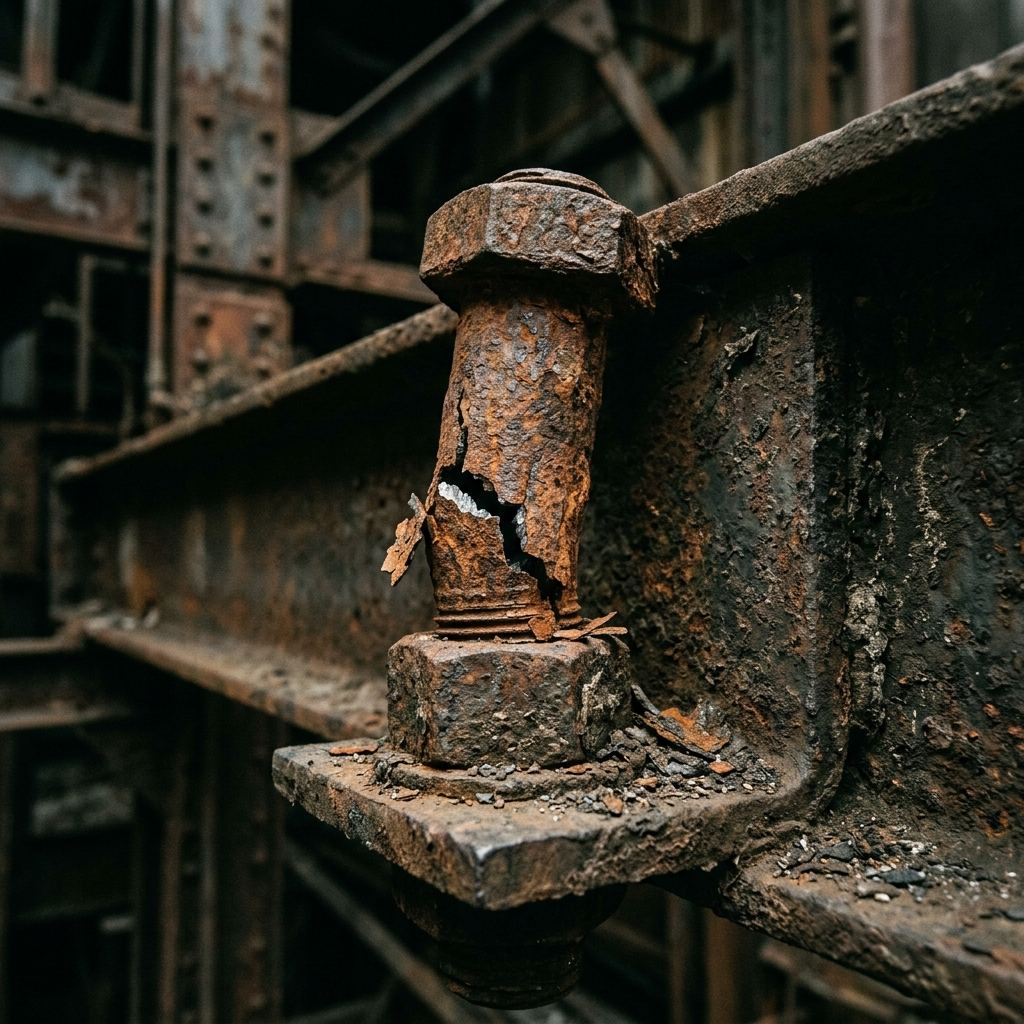
Rust is one of the most common problems affecting iron and steel surfaces.
You may notice it first as a small orange-brown spot on an iron gate, window grill, railing, agricultural tool or steel structure. Over time, that small spot can spread, damage the surrounding coating and progressively deteriorate the metal surface.
But why does metal rust?
Rust forms when iron or steel reacts with oxygen and moisture in the environment. This is an electrochemical process known as corrosion. When the metal surface is exposed to water and oxygen, iron begins to oxidize and produces iron oxides, commonly called rust.
The important point is that rust is not simply a colour change. It is a sign that the metal surface is undergoing corrosion.
Understanding why rust forms is the first step toward preventing it.
FERONIX helps address corrosion at different stages—from rust removal and rust treatment to long-term protective coating.
What Is Rust?
Rust is the corrosion product that forms primarily on iron and iron-containing metals such as steel.
When an iron or steel surface is exposed to:
- Moisture
- Oxygen
- Rainwater
- Humidity
- Condensation
- Salt or other contaminants
the surface can begin to corrode.
The resulting reddish-brown material is commonly called rust.
Rust is generally porous and does not provide the same protective barrier that some naturally formed oxide layers provide on other metals. As corrosion progresses, additional metal can become exposed to the environment.
That is why early rust protection is important.
How Does Rust Form?
The rusting process can be simplified into four stages:
Metal Is Exposed
Iron or steel becomes exposed to the surrounding environment.
This may happen because of:
- Scratches
- Damaged paint
- Peeling coating
- Poor surface preparation
- Mechanical damage
- Abrasion
- Manufacturing defects
- Coating deterioration
Moisture Reaches the Surface
Water or moisture comes into contact with the exposed metal.
This can happen through:
- Rain
- High humidity
- Condensation
- Water accumulation
- Wet environments
- Poor drainage
Oxygen Takes Part in the Reaction
Oxygen from the surrounding air participates in the electrochemical corrosion process.
The presence of both moisture and oxygen allows corrosion reactions to continue.
Corrosion Products Develop
Iron is progressively converted into iron oxides and hydroxides.
These corrosion products are what we commonly recognize as rust.
The cycle can continue as long as the conditions supporting corrosion remain present.
The Simple Science Behind Rust
At a simplified level, rusting can be represented as:
Iron + Oxygen + Water → Iron Oxides / Rust
However, rust formation is actually an electrochemical process involving anodic and cathodic reactions.
At anodic areas of the metal:
Fe → Fe²⁺ + 2e⁻
At cathodic areas, oxygen and water participate in reactions involving the electrons released by iron.
The resulting iron ions and hydroxide species can eventually form hydrated iron oxides and related corrosion products.
For everyday metal protection, the practical lesson is simple:
If moisture and oxygen can repeatedly reach an unprotected iron or steel surface, corrosion can develop and progress.
That is why an effective protective coating acts as an important barrier between the metal and its environment.
Why Does Steel Rust?
Steel is primarily an iron-based material, so it can also corrode.
Steel structures can be particularly vulnerable when their protective coating becomes damaged or deteriorates.
Examples include:
- Structural steel
- Metal gates
- Window grills
- Railings
- Fencing
- Metal doors
- Machinery
- Agricultural equipment
- Pipelines
- Outdoor fabrication
- Industrial structures
Steel does not need to be completely exposed before corrosion becomes a concern. Small coating failures, scratches, edges, joints and areas with accumulated moisture can become starting points for corrosion.
What Causes Metal to Rust Faster?
Not all metal surfaces corrode at the same rate.
Environmental and surface conditions can significantly influence corrosion.
Moisture
Persistent moisture is one of the biggest contributors to corrosion.
Metal exposed to rain, humidity, condensation or water accumulation can face increased corrosion risk.
High Humidity
High humidity keeps surfaces exposed to moisture for longer periods.
This is particularly important in regions experiencing long monsoon seasons or consistently humid conditions.
Salt and Coastal Air
Coastal environments can expose metal surfaces to salt-containing moisture.
Salt contamination can increase the conductivity of surface moisture and contribute to more aggressive corrosion conditions.
Damaged Paint
Paint and protective coatings can separate metal from the environment.
When the coating is scratched, chipped, cracked or peeled, the underlying metal may become exposed.
Poor Surface Preparation
Even a good coating can perform poorly when applied over:
- Loose rust
- Oil
- Grease
- Dirt
- Dust
- Moisture
- Loose old paint
Proper surface preparation is therefore a critical part of corrosion protection.
Water Traps
Certain designs allow water to remain around:
- Joints
- Welds
- Corners
- Crevices
- Fasteners
- Horizontal surfaces
Longer moisture exposure can increase corrosion risk.
Industrial Exposure
Industrial environments can contain moisture, chemicals, dust and other contaminants that may increase corrosion risk depending on the application.
The coating system should therefore be selected according to the actual exposure conditions.
What Are the Early Signs of Rust?
Rust rarely appears as a major problem without warning.
Look for:
Orange or Brown Spots
Small discoloured areas can be an early indication of corrosion.
Bubbling Paint
Raised or blistered coating may indicate corrosion developing underneath.
Peeling Paint
When coating adhesion is compromised, exposed metal may become increasingly vulnerable.
Flaking
Flaking rust or coating indicates that the surface condition has deteriorated.
Rough Metal Surface
A previously smooth metal surface becoming rough or uneven may indicate corrosion.
Rust Around Welds and Joints
Welds, joints, edges and connections can require particular attention during inspection.
Recurring Rust
If rust repeatedly returns after painting, the underlying cause may not have been properly addressed.
Early identification gives you an opportunity to prepare, treat and protect the surface before corrosion becomes more extensive.
Why Does Rust Keep Coming Back After Painting?
This is one of the most common problems in metal painting.
Simply applying a new coat of paint over an existing rusty surface does not necessarily solve the corrosion problem.
Rust can return because of:
- Loose rust remaining on the surface
- Contamination
- Moisture trapped beneath the coating
- Poor surface preparation
- Incompatible coating systems
- Insufficient coating
- Damaged coating
- Continuous exposure to moisture
- Corrosion continuing beneath the coating
A successful corrosion-protection process therefore begins before the paint is applied.
The basic approach is:
Inspect → Prepare → Treat where required → Protect
How to Prevent Metal from Rusting
Effective rust prevention is based on reducing the opportunity for moisture and oxygen to continuously reach the metal.
Several methods can be used depending on the application.
Keep the Surface Clean
Dirt, grease, salts and other contaminants should be removed before coating.
Prepare the Surface Properly
Loose rust, loose paint and other unstable material should be addressed before applying a protective coating.
Treat Existing Rust
Depending on the condition and coating system, existing rust may need to be removed or treated.
This is where products such as FERONIX RUSTKLEEN and FERONIX RUSTCON can be considered according to their intended use and application instructions.
Apply the Appropriate Protective Coating
After suitable surface preparation, the metal should receive a coating system appropriate for the surface and environment.
FERONIX CORROX is designed as an anti-corrosive coating with Direct-to-Metal technology for suitable applications.
Use a Primer Where Required
Some coating systems require a dedicated primer for adhesion, corrosion protection or system compatibility.
FERONIX CERAMAX is FERONIX's ceramic metal primer for applications where a primer-based system is appropriate.
Inspect the Surface Regularly
Even well-protected metal should be inspected periodically, particularly when exposed to:
- Rain
- High humidity
- Coastal conditions
- Industrial environments
- Abrasion
- Mechanical damage
FERONIX Approach to Rust Protection
FERONIX approaches corrosion protection as more than simply applying paint over rust.
The right solution depends on:
Surface condition + preparation + treatment + coating + environment
FERONIX products address different stages of this process.
FERONIX RUSTKLEEN — Rust Removal
When rust needs to be removed as part of surface preparation, FERONIX RUSTKLEEN is designed for rust removal applications.
Where rust conversion/treatment is appropriate, FERONIX RUSTCON is designed to address remaining rust according to its application requirements.
FERONIX CORROX is an anti-corrosive SI-PU Direct-to-Metal coating designed to provide protective coating performance on suitable metal surfaces.
Role: PROTECT
It can be considered for applications such as:
- Iron gates
- Window grills
- Railings
- Boundary fencing
- Metal doors
- Steel structures
- Industrial machinery
- Agricultural equipment
- Other suitable metal surfaces
FERONIX CERAMAX — Ceramic Metal Primer
For coating systems where a dedicated primer is required, FERONIX CERAMAX provides a ceramic metal primer solution.
Role: PRIME
The appropriate coating system should always be selected based on the substrate, existing coating, environmental exposure and project requirements.
FERONIX's 4-Stage Metal Protection Approach
For many corrosion-related applications, FERONIX can be positioned around a simple process:
01 — REMOVE
Remove loose contamination and rust where required.
Treat remaining rust where the application calls for rust conversion.
Use a dedicated primer when the selected coating system requires one.
Apply the appropriate anti-corrosive protective coating.
FERONIX CORROX
This makes FERONIX more than a single-product solution.
It becomes a complete corrosion-protection approach.
Can You Stop Rust Completely?
Rust prevention is not simply about finding a paint and expecting permanent protection under every condition.
The performance of any corrosion-protection system depends on factors such as:
- Metal substrate
- Surface preparation
- Coating system
- Coating thickness
- Application quality
- Environmental exposure
- Mechanical damage
- Maintenance
- Service conditions
A properly selected and applied protective coating can significantly reduce exposure of the metal to corrosive conditions, but no coating should be considered an unlimited guarantee against corrosion in every environment.
That is why proper preparation, correct product selection and regular inspection matter.
Where Can FERONIX Help Protect Against Rust?
FERONIX corrosion-protection solutions can be considered across a wide range of metal applications.
Residential & Commercial
- Iron gates
- Window grills
- Balcony railings
- Boundary fencing
- Metal doors
- Metal furniture
Outdoor Applications
- Agricultural equipment
- Fencing
- Outdoor fabrication
- Structural steel
- Equipment exposed to rain and humidity
Industrial Applications
- Machinery
- Steel structures
- Fabricated components
- Industrial equipment
- Suitable pipelines and metal surfaces
The appropriate FERONIX product and coating system should be selected according to the specific substrate and exposure conditions.
Rust Protection During Monsoon
Monsoon conditions can increase corrosion risk because metal surfaces may experience repeated exposure to:
Rain + Humidity + Moisture + Contaminants
Before the monsoon:
- Inspect vulnerable metal surfaces.
- Identify early rust.
- Remove loose rust and coating.
- Address corrosion appropriately.
- Apply a suitable protective coating.
- Check damaged areas periodically.
For suitable metal applications, FERONIX CORROX can form part of a corrosion-protection system.
Protecting Metal in Coastal Areas
Coastal environments deserve additional attention because salt-containing moisture can increase corrosion risk.
Metal surfaces near coastal areas should be inspected for:
- Rust spots
- Coating breakdown
- Salt deposits
- Blistering
- Peeling
- Corrosion around joints and edges
The coating system should be selected according to the actual exposure category and required performance.
For appropriate applications, FERONIX corrosion-protection products can form part of a broader protective coating system.
Common Mistakes That Allow Rust to Return
❌ Painting directly over loose rust
❌ Choosing a coating without considering environmental exposure
❌ Applying an unsuitable coating system
Good corrosion protection begins with preparation—not just paint.
Rust Is a Surface Problem Today. It Can Become a Maintenance Problem Tomorrow.
A small rust spot may appear harmless.
But corrosion can progress from:
Surface discoloration
→ Rust formation
→ Coating deterioration
→ Metal surface damage
→ Increasing maintenance requirements
→ Potential component replacement
The earlier corrosion is identified and properly addressed, the more opportunities there may be to protect the metal surface.
That is why preventive corrosion protection matters.
Why Choose FERONIX for Rust Protection?
FERONIX is built around one simple idea:
Jahan Rust, Wahan FERONIX.
Rather than treating every corrosion problem as the same, FERONIX provides products addressing different stages of metal protection.
RUSTKLEEN — Remove
RUSTCON — Treat
CERAMAX — Prime
CORROX — Protect
This product approach allows users to select a solution based on the actual condition of the metal and the required coating system.
FERONIX — Protecting Every Surface.
Frequently Asked Questions
Why does iron rust faster when exposed to water?
Water enables the electrochemical reactions involved in corrosion. When moisture remains on an iron surface in the presence of oxygen, corrosion can progress.
Does steel rust?
Yes. Steel contains iron and can corrode when exposed to suitable environmental conditions.
Can paint prevent rust?
A properly selected and applied protective coating can help isolate metal from moisture and corrosive environmental conditions. However, performance depends heavily on surface preparation, coating selection, application and exposure conditions.
Can I paint directly over rust?
Painting directly over loose or unstable rust is generally not a good surface-preparation practice. Loose rust and contamination should be addressed before applying the selected coating system.
What is the difference between rust removal and rust conversion?
Rust removal aims to remove rust from the surface. Rust conversion is intended to chemically treat remaining rust through a conversion process. The appropriate approach depends on the surface condition and product requirements.
What is Direct-to-Metal paint?
Direct-to-Metal, or DTM, coating technology is designed for application directly to suitable prepared metal substrates without a separate primer step where the product specification permits it.
What is FERONIX CORROX?
FERONIX CORROX is an anti-corrosive SI-PU Direct-to-Metal coating designed for suitable metal protection applications.
What is FERONIX RUSTKLEEN?
FERONIX RUSTKLEEN is a rust removal solution intended for rust-removal applications as part of metal surface preparation.
What is FERONIX RUSTCON?
FERONIX RUSTCON is a rust converter designed for rust treatment/conversion applications according to its product instructions.
When is FERONIX CERAMAX used?
FERONIX CERAMAX is a ceramic metal primer intended for applications where a dedicated primer-based coating system is required.
How can I protect an iron gate from rust?
Inspect the gate, clean and prepare the surface, remove or treat existing rust as appropriate, and apply a suitable protective coating system. FERONIX RUSTKLEEN, RUSTCON, CERAMAX and CORROX can be considered at the appropriate stages depending on the surface condition and coating system.
Don't Wait for Rust to Spread.
Whether you are protecting an iron gate, railing, steel structure, machinery or another suitable metal surface, the right corrosion-protection approach starts with understanding the condition of the metal.
Remove. Treat. Prime. Protect.
Choose the appropriate FERONIX solution for your surface.
Jahan Rust, Wahan FERONIX.
FERONIX — Protecting Every Surface.