
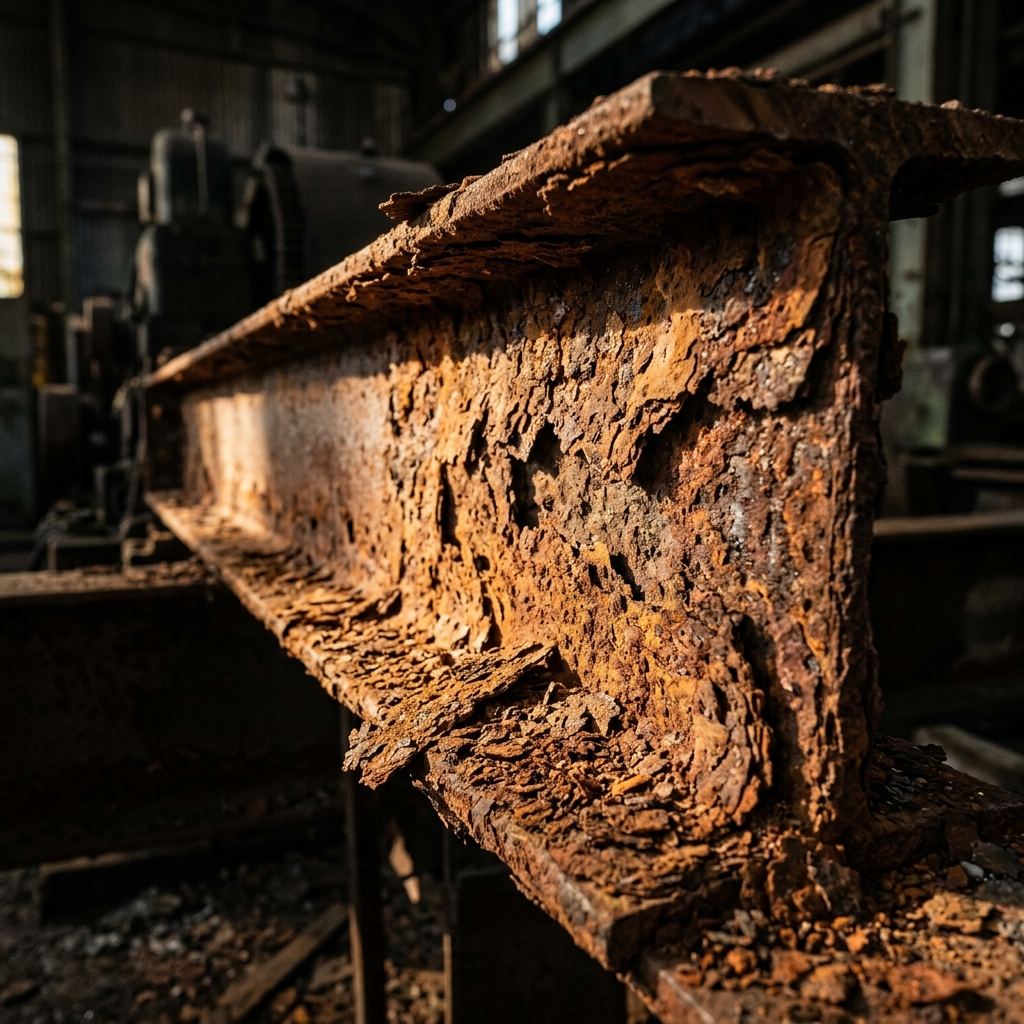
An iron gate is exposed to the environment every day.
Rain, humidity, sunlight, dust, moisture, scratches and everyday use can gradually damage its protective coating. Once the underlying metal becomes exposed, corrosion can begin.
At first, rust may appear as a few small orange or brown spots.
If ignored, those spots can develop into:
- Peeling paint
- Bubbling coating
- Flaking rust
- Surface roughness
- Pitting
- Increasing coating failure
- More extensive corrosion
The good news is that proper surface preparation and an appropriate protective coating system can help protect an iron gate from corrosion.
This guide explains how to inspect, prepare, treat and protect an iron gate using the FERONIX approach.
The FERONIX process:
INSPECT → CLEAN → PREPARE → REMOVE/TREAT → PRIME WHERE REQUIRED → PROTECT → MAINTAIN
Why Do Iron Gates Rust?
Iron gates rust because iron reacts with oxygen and moisture through an electrochemical corrosion process.
Outdoor gates are particularly exposed to:
- Rain
- Humidity
- Condensation
- Water accumulation
- Dust
- Salt-containing moisture
- Mechanical scratches
- Impact
- Paint deterioration
A gate may look perfectly painted from a distance while small areas around welds, hinges, edges and scratches are already beginning to corrode.
That is why regular inspection is important.
10 Common Places Where Iron Gates Start Rusting
When inspecting your gate, do not only look at the large flat areas.
Pay particular attention to:
Weld Joints
Rust can appear around welded areas where coating protection may deteriorate.
Hinges
Hinges experience movement, friction and exposure to water.
Bottom Edges
The bottom portion of a gate can be exposed to splash water, mud and moisture.
Corners
Corners can be difficult to coat uniformly and may collect contaminants.
Decorative Sections
Intricate designs can trap dust and moisture.
Scratches
A scratch can expose the metal beneath the coating.
Fasteners
Bolts, screws and other connections should be inspected for rust staining and coating failure.
Gate Frame
The frame is exposed to continuous outdoor conditions and should be inspected along its edges and joints.
Areas Near the Ground
Splashing rainwater and standing moisture can increase corrosion risk.
Previously Repaired Areas
If rust has already returned after painting, the area deserves closer inspection before repainting.
Signs That Your Iron Gate Needs Rust Protection
Your gate may require attention if you see:
Orange or Brown Rust Spots
The most obvious warning sign.
Bubbling Paint
May indicate coating failure or corrosion beneath the coating.
Peeling Paint
Exposes the substrate to moisture and oxygen.
Flaking Rust
Indicates deterioration of the metal surface and/or coating.
Rough Metal
A previously smooth surface becoming rough can indicate corrosion.
Rust Around Welds
Welds and connections should be inspected carefully.
Rust Returning After Painting
This can indicate that the previous surface preparation or coating system did not adequately address the underlying problem.
Can You Paint Directly Over a Rusty Iron Gate?
This is one of the most important questions.
Short answer:
Do not simply paint over loose rust and unstable coating.
Applying new paint over loose rust can trap an unstable surface underneath the new coating and may result in continued coating failure.
A better approach is:
Inspect → Clean → Remove/Treat → Prepare → Protect
The exact preparation depends on the condition of the gate and the selected coating system.
Step-by-Step: How to Protect an Iron Gate from Rust
Step 1 — Inspect the Gate
Before doing anything, inspect the entire gate.
Look for:
- Rust
- Peeling paint
- Blisters
- Cracks
- Scratches
- Loose coating
- Weld corrosion
- Hinge corrosion
- Pitting
- Moisture accumulation
Do not assume that the visible front side represents the condition of the entire gate.
Inspect:
Front + Back + Edges + Bottom + Welds + Hinges + Joints
Step 2 — Remove Dirt and Contaminants
A protective coating needs a properly prepared surface.
Remove:
- Dust
- Dirt
- Grease
- Oil
- Mud
- Salts
- Loose contaminants
The surface should be cleaned according to the requirements of the selected coating system.
Step 3 — Remove Loose Rust and Paint
Loose rust and unstable paint should be addressed before applying a new coating.
Depending on the condition, preparation may involve appropriate mechanical or chemical methods.
The objective is to create a stable surface suitable for the selected protective coating.
Step 4 — Use FERONIX RUSTKLEEN Where Rust Removal Is Required
When existing rust needs to be removed as part of surface preparation, FERONIX RUSTKLEEN can be considered for suitable rust-removal applications.
It forms the rust-removal stage of the FERONIX approach.
Always follow the applicable product instructions, preparation requirements and safety precautions.
Step 5 — Use FERONIX RUSTCON Where Rust Conversion Is Appropriate
Sometimes suitable rust remains after mechanical cleaning or surface preparation.
Where rust conversion/treatment is appropriate, FERONIX RUSTCON can be considered.
Rust conversion is not the same as simply painting over loose rust.
The substrate still needs to be appropriately prepared, and the product should be used according to its technical instructions.
Step 6 — Decide Whether a Primer Is Required
Not every coating system uses the same number of layers.
A conventional system may involve:
Prepared Metal → Primer → Intermediate Coat → Topcoat
A dedicated primer can provide functions such as:
- Adhesion
- Corrosion protection
- Substrate preparation
- Compatibility with subsequent coatings
FERONIX CERAMAX
FERONIX CERAMAX is a ceramic metal primer designed for suitable primer-based metal coating systems.
If the selected coating specification requires a primer, CERAMAX can form the primer stage.
Step 7 — Consider Direct-to-Metal Protection
An alternative approach for suitable applications is Direct-to-Metal technology.
What is DTM?
DTM means Direct-to-Metal.
A DTM coating is designed to be applied directly to a suitably prepared metal substrate where the product specification permits it.
FERONIX CORROX
FERONIX CORROX is an anti-corrosive SI-PU DTM coating designed for suitable metal applications.
The important distinction is:
Direct-to-Metal does not mean Direct-to-Rust.
The gate still needs proper surface preparation.
Step 8 — Apply FERONIX CORROX
Once the surface has been appropriately prepared, FERONIX CORROX can be considered as the protective anti-corrosive coating for suitable iron and steel applications.
Its role is:
PROTECT
It can be considered for suitable applications such as:
- Iron gates
- Window grills
- Railings
- Boundary fencing
- Metal doors
- Outdoor metal fabrication
- Suitable steel components
Always follow the product's technical data sheet and application instructions for preparation, application, drying/recoat requirements and recommended coating thickness.
The FERONIX Iron Gate Protection System
The simplest way to understand the FERONIX approach is:
CONDITION 1 — Rust Needs Removal
Not every gate requires all four products.
The correct combination depends on the actual condition of the gate and the selected coating system.
Can FERONIX CORROX Be Used on an Old Iron Gate?
It can be considered for suitable properly prepared iron and steel surfaces.
Before application, evaluate:
- Existing paint
- Rust condition
- Surface cleanliness
- Loose coating
- Moisture
- Oil/grease
- Environmental exposure
The old coating must be sufficiently sound and compatible with the selected system, or unsuitable coating should be removed as part of preparation.
For detailed application requirements, refer to the relevant FERONIX CORROX TDS.
How to Protect a New Iron Gate from Rust
The best time to think about rust protection is before significant corrosion begins.
For a new gate:
Inspect the fabricated surface
Check welds, edges and joints.
Clean the substrate
Remove contaminants and fabrication residues.
Prepare the surface
Follow the required preparation standard.
Select the coating system
Choose between an appropriate primer-based system or DTM system according to the project requirement.
Apply the coating correctly
Follow the product's technical instructions.
Inspect the finished coating
Check for:
- Missed areas
- Uneven coverage
- Runs
- Sagging
- Pinholes
- Damage
Maintain
Inspect periodically and repair coating damage early.
How to Protect an Already Rusty Iron Gate
An old rusty gate requires more attention than a new gate.
A practical process is:
Inspect
↓
Clean
↓
Remove loose rust and coating
↓
Use RUSTKLEEN where rust removal is appropriate
↓
Use RUSTCON where rust conversion is appropriate
↓
Use CERAMAX if a primer-based system is specified
↓
Apply CORROX where a suitable DTM anti-corrosive system is specified
↓
Inspect and maintain
Iron Gate Rust Protection During Monsoon
Monsoon can be particularly challenging for outdoor metal.
Repeated exposure to:
- Rain
- Humidity
- Water
- Mud
- Splashing
- Condensation
can increase corrosion risk.
Before monsoon, inspect:
- Gate frame
- Welds
- Hinges
- Bottom edges
- Decorative areas
- Scratched sections
- Existing rust spots
If coating damage is found, address it before corrosion becomes extensive.
FERONIX recommendation
Inspect → Prepare → Treat where required → Protect
For suitable metal surfaces, FERONIX CORROX can be used as part of a protective coating system.
How to Protect an Iron Gate Near the Coast
Coastal environments can be more aggressive because metal surfaces may be exposed to salt-containing moisture.
Inspect the gate more frequently for:
- Rust staining
- Coating deterioration
- Salt deposits
- Blistering
- Peeling
- Corrosion around welds
For coastal applications, the coating system should be selected based on the actual exposure conditions and required performance.
Do not select a coating solely because it is labelled “anti-rust.”
How Often Should an Iron Gate Be Checked for Rust?
There is no single inspection interval that is correct for every gate.
Inspection frequency depends on:
- Climate
- Rainfall
- Humidity
- Coastal exposure
- Industrial exposure
- Gate location
- Coating condition
- Mechanical usage
Outdoor gates should be inspected periodically, with additional attention after periods of heavy rain or prolonged humidity.
Check especially after monsoon.
Why Does Rust Come Back on an Iron Gate?
If rust returns shortly after painting, investigate the cause instead of repeatedly applying another coat.
Possible reasons include:
Rust Was Not Properly Removed or Treated
Remaining corrosion can continue to affect the coating system.
Loose Paint Was Left Behind
New coating applied over unstable old coating may fail.
Surface Was Dirty
Oil, grease, dust or salts can interfere with coating adhesion.
Surface Was Wet
Moisture can compromise coating performance.
Wrong Coating System
The selected system may not be suitable for the exposure.
Mechanical Damage
Scratches or impacts may expose the substrate.
Water Is Accumulating
The gate design or installation may allow prolonged moisture exposure.
Common Iron Gate Painting Mistakes
Mistake 1: Painting Over Loose Rust
Why it fails: The unstable corrosion remains underneath.
Mistake 2: Skipping Cleaning
Why it fails: Contaminants can interfere with adhesion.
Mistake 3: Ignoring Welds
Why it fails: Corrosion can begin around joints and welds.
Mistake 4: Ignoring the Bottom Edge
Why it fails: Splash water and moisture can accelerate deterioration.
Mistake 5: Painting Over Moisture
Why it fails: Moisture can affect coating performance.
Mistake 6: Choosing Paint Only by Price
Why it fails: Different environments require different coating systems.
Mistake 7: Assuming DTM Means No Preparation
Why it fails: DTM still requires a suitably prepared substrate.
Mistake 8: Ignoring Coating Damage
Why it fails: Small scratches can become corrosion initiation points.
Mistake 9: Not Inspecting After Monsoon
Why it fails: New corrosion may remain unnoticed.
Mistake 10: Repainting Without Finding the Cause
Why it fails: The same corrosion mechanism may cause the problem to return.
How Much Does It Cost to Protect an Iron Gate?
The cost depends on several factors:
- Gate size
- Condition
- Amount of existing rust
- Surface preparation required
- Labour
- Number of coating stages
- Selected coating system
- Environmental exposure
- Required finish
- Maintenance requirements
A lightly rusted gate may require significantly less preparation than a gate with extensive corrosion and peeling coating.
Therefore, the cheapest paint is not necessarily the lowest-cost solution over the life of the gate.
Proper preparation and suitable protection can help reduce repeated maintenance.
Iron Gate Rust Protection: Traditional System vs DTM
The choice should be based on the actual project specification and surface condition.
Why FERONIX CORROX for Iron Gate Protection?
Iron gates require protection against the everyday conditions they face outdoors.
FERONIX CORROX provides an anti-corrosive SI-PU DTM coating approach for suitable prepared metal surfaces.
Its position within the FERONIX range is simple:
RUSTKLEEN → REMOVE
RUSTCON → TREAT
CERAMAX → PRIME
CORROX → PROTECT
This allows FERONIX to address different stages of a metal-protection process instead of treating every rusty surface in exactly the same way.
FERONIX Products for Iron Gate Protection
Primary role: Protect
Suitable for appropriate iron and steel applications requiring anti-corrosive coating protection.
Primary role: Remove
For suitable rust-removal applications during surface preparation.
Primary role: Treat
For suitable rust conversion/treatment applications.
Primary role: Prime
For suitable coating systems where a dedicated primer is required.
A Simple FERONIX Iron Gate Maintenance Routine
Every inspection
Check:
- Rust spots
- Scratches
- Peeling paint
- Welds
- Hinges
- Bottom edges
- Joints
Before monsoon
Perform a detailed inspection and address coating damage.
After monsoon
Look for:
- New rust
- Blistering
- Peeling
- Water-related coating failure
When damage appears
Do not wait for the damaged area to become extensive.
Inspect → Prepare → Treat → Protect
When Should You Repaint an Iron Gate?
Repainting should not be based only on a fixed calendar.
Look at the actual condition of the coating.
Repainting or maintenance may be appropriate when you observe:
- Significant coating deterioration
- Widespread peeling
- Repeated rusting
- Exposed metal
- Extensive scratches
- Corrosion around joints
- Loss of protective coating
A condition-based maintenance approach is generally more useful than repainting simply because a certain number of years has passed.
How FERONIX Changes the Way You Think About Iron Gate Protection
Traditional thinking often looks like:
“The gate has rust. Paint it.”
FERONIX takes a different approach:
What is the condition?
Identify.
What is causing the problem?
Assess.
What preparation is needed?
Prepare.
Does the rust need removal?
RUSTKLEEN.
Does remaining suitable rust require conversion?
RUSTCON.
Does the selected system require primer?
CERAMAX.
Is a DTM system suitable?
CORROX.
How do we maintain it?
Inspect and protect early.
This approach helps turn rust protection from a simple repainting exercise into a structured surface-protection process.
Frequently Asked Questions
What is the best way to protect an iron gate from rust?
Inspect the gate regularly, prepare the surface correctly, remove or treat existing rust as appropriate and apply a suitable anti-corrosive coating system. FERONIX CORROX can be considered for suitable prepared iron and steel surfaces.
What is the best anti-rust paint for an iron gate?
The appropriate coating depends on the metal condition, preparation, environment and required performance. FERONIX CORROX is an anti-corrosive SI-PU DTM coating designed for suitable metal applications.
Can I paint a rusty iron gate?
Yes, but the surface should be appropriately prepared first. Loose rust, unstable paint and contaminants should be addressed before applying the selected coating system.
Should I remove rust before painting a gate?
Loose and unstable rust should be removed or otherwise addressed according to the selected coating system. FERONIX RUSTKLEEN is designed for suitable rust-removal applications.
What is the difference between rust removal and rust conversion?
Rust removal aims to remove corrosion products, while rust conversion chemically treats suitable remaining rust. FERONIX RUSTKLEEN is positioned for rust removal, while FERONIX RUSTCON is positioned for rust conversion/treatment.
Can I use a rust converter on an iron gate?
A rust converter may be appropriate where suitable remaining rust requires chemical conversion. FERONIX RUSTCON is designed for suitable rust conversion/treatment applications. Always follow the product's technical instructions.
Do I need primer before painting an iron gate?
Not necessarily. It depends on the selected coating system. A conventional system may require a dedicated primer, while a suitable DTM coating is designed to be applied directly to prepared metal where specified. FERONIX CERAMAX is the primer option in the FERONIX range.
What is DTM paint?
DTM means Direct-to-Metal. It refers to coating systems designed for direct application to suitably prepared metal without a separate primer where the product specification permits.
Can FERONIX CORROX be applied directly over rust?
DTM does not mean applying the coating directly over loose rust. The metal must be suitably prepared according to the product's technical requirements before CORROX is applied.
How do I stop my iron gate from rusting during monsoon?
Inspect the gate before monsoon, address existing rust and coating damage, prepare vulnerable areas properly and apply a suitable protective coating system. Periodic inspection during and after monsoon is also important.
Why does my iron gate rust after painting?
Possible causes include inadequate surface preparation, remaining corrosion, moisture, coating damage, unsuitable coating selection or environmental exposure.
How often should I repaint my iron gate?
There is no universal repainting interval. Inspect the coating condition and environmental exposure instead. Repaint or repair when coating deterioration or corrosion indicates that maintenance is required.
Is FERONIX CORROX suitable for outdoor iron gates?
FERONIX CORROX is designed for suitable metal applications and can be considered for outdoor iron and steel surfaces. Suitability depends on surface preparation, exposure conditions and the product's technical requirements.
Can FERONIX products be used together?
Different FERONIX products address different stages of surface protection. Depending on the condition and selected system, RUSTKLEEN, RUSTCON, CERAMAX and CORROX may be used at different stages. They should not automatically be treated as a mandatory sequence for every gate.
Protect Your Iron Gate Before Rust Takes Over.
Your gate protects your property.
Protect the gate that protects you.
Whether you are dealing with a few early rust spots or preparing an older gate for complete recoating, start with the right surface-protection process.
Inspect.
Prepare.
Treat where required.
Protect.
Jahan Rust, Wahan FERONIX.
FERONIX — Protecting Every Surface.