
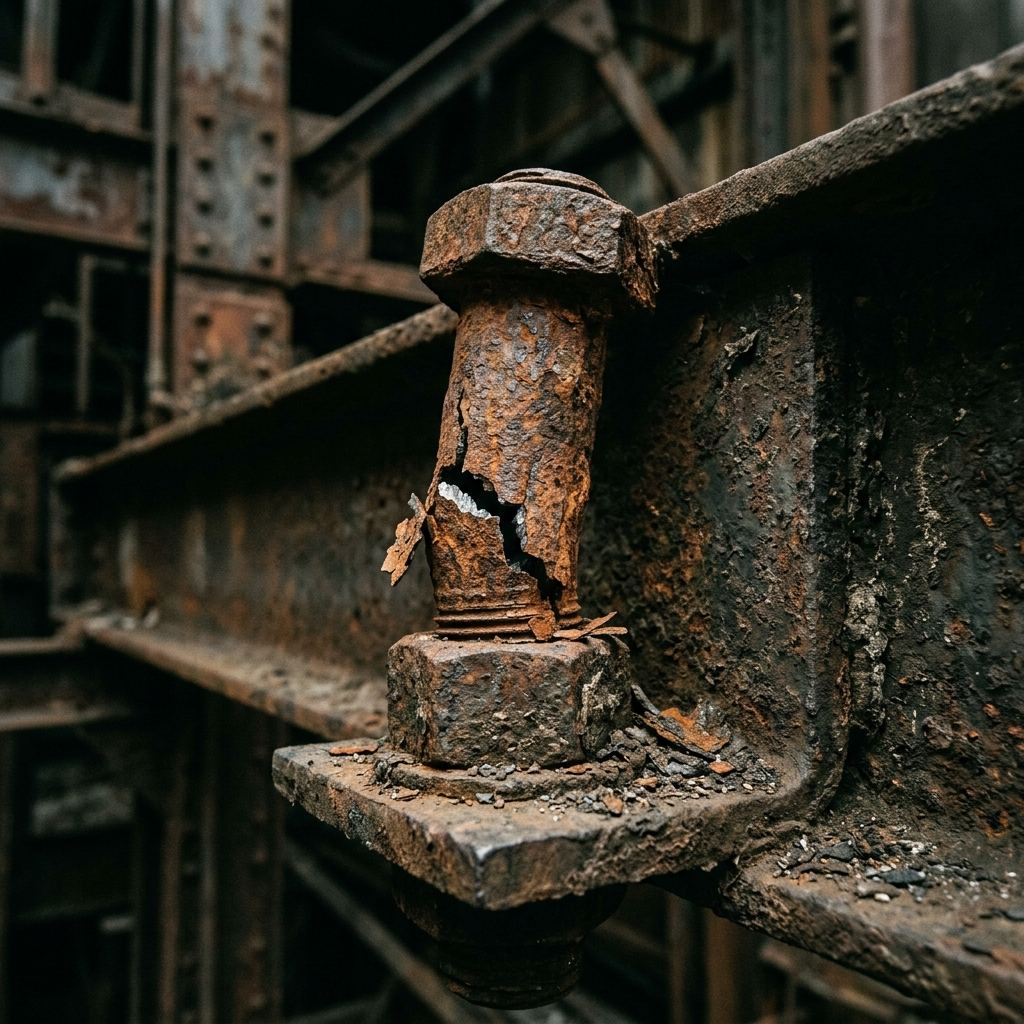
Rust vs Corrosion: What's the Difference?
Rust and corrosion are often used as if they mean the same thing. They are related, but they are not exactly the same.
In simple terms:
Corrosion is the broader process of metal deterioration, while rust is the corrosion product commonly associated with iron and steel.
For example, when an iron gate develops a reddish-brown layer, we commonly call it rust.
When a metal deteriorates because of a chemical or electrochemical reaction with its environment, the broader phenomenon is called corrosion.
Understanding this difference helps you identify the problem correctly and choose a more appropriate protection approach.
For FERONIX, corrosion protection is not simply about covering visible rust with paint.
It is about:
Identify → Prepare → Treat → Protect
Rust vs Corrosion at a Glance
The simplest way to remember it:
Rust is corrosion of iron-based materials; corrosion is the broader phenomenon.
What Is Rust?
Rust is the common term used for corrosion products formed on iron and iron-containing materials such as steel.
When iron or steel is exposed to environmental conditions involving moisture and oxygen, electrochemical corrosion reactions can occur.
The resulting iron oxides and related compounds are commonly recognized as rust.
Rust is usually:
- Orange
- Reddish-brown
- Brown
- Dark brown
- Flaky
- Powdery
- Rough
The exact appearance can vary according to the environment and stage of corrosion.
What Is Corrosion?
Corrosion is the deterioration of a metal or alloy caused by chemical or electrochemical reactions with its surrounding environment.
It is a much broader concept than rust.
Corrosion can occur because of exposure to:
- Moisture
- Oxygen
- Salts
- Chemicals
- Pollutants
- Industrial environments
- Temperature variations
- Electrochemical conditions
Different metals can form different corrosion products.
Therefore, not every corrosion problem is rust.
Why Does Iron Rust?
Iron rusts because it undergoes electrochemical reactions when exposed to an environment containing moisture and oxygen.
A simplified representation is:
Iron + Oxygen + Water → Iron Corrosion Products
At the metal surface, iron can lose electrons and form iron ions. Oxygen and water participate in complementary reactions, eventually producing hydrated iron oxides and related compounds.
The important practical point is:
Moisture and oxygen reaching an exposed iron or steel surface can create conditions for rust formation.
This is why protective coatings are used to reduce the metal's exposure to the surrounding environment.
Why Does Corrosion Occur?
Corrosion is influenced by the interaction between a metal and its environment.
Some important factors include:
Moisture
Water enables many corrosion reactions and can remain on metal surfaces for extended periods.
Oxygen
Oxygen participates in the electrochemical reactions involved in many forms of corrosion.
Salt
Salt-containing moisture can increase corrosion risk, particularly in coastal environments.
Chemicals
Certain chemicals can create aggressive conditions for particular metals.
Humidity
High humidity can increase the time that metal surfaces remain exposed to moisture.
Temperature
Temperature can influence corrosion rates and environmental conditions.
Surface Damage
Scratches, chips and coating failures can expose the underlying metal.
Is Rust a Type of Corrosion?
Yes.
Rust is generally considered the corrosion product associated with iron and iron-based materials.
Think of it this way:
This distinction is useful when discussing corrosion protection because the correct treatment depends on:
- Which metal is involved
- What type of corrosion is occurring
- How severe the corrosion is
- What environment the metal is exposed to
- What coating system is required
Examples of Rust
Rust is commonly found on:
- Iron gates
- Window grills
- Balcony railings
- Boundary fencing
- Metal doors
- Steel furniture
- Agricultural equipment
- Steel structures
- Machinery
- Fabricated steel components
Typical appearance:
Orange/brown → reddish-brown → dark/rough/flaky corrosion
The appearance alone does not always tell you how severe the underlying metal deterioration is, so heavily corroded or critical components should be properly assessed.
Examples of Corrosion
Corrosion is a broader category and can affect many types of metals.
Examples include:
Iron and Steel
Often associated with visible rust.
Aluminium
Can develop oxide layers and other forms of corrosion depending on the environment.
Copper
Can develop green or blue-green corrosion products, commonly known as patina, under suitable environmental conditions.
Zinc
Can develop characteristic corrosion products depending on exposure.
Stainless Steel
Although corrosion-resistant, stainless steel can still corrode under certain environmental and chemical conditions.
This demonstrates why rust and corrosion should not be treated as identical terms.
Rust vs Corrosion: Is One Worse Than the Other?
It is not accurate to simply say that one is “worse.”
Rust is a specific manifestation of corrosion associated with iron and steel.
The severity of corrosion depends on factors such as:
- Amount of metal affected
- Depth of corrosion
- Environment
- Exposure duration
- Metal type
- Structural importance
- Coating condition
- Maintenance
A small rust spot on a gate may be a relatively minor maintenance issue.
Corrosion affecting a critical structural component can be a much more serious concern.
Early Rust vs Advanced Corrosion
Early Rust
Typical signs include:
- Small orange spots
- Light surface staining
- Minor coating damage
- Slight roughness
- Localized corrosion
More Advanced Corrosion
Possible signs include:
- Heavy rust
- Flaking corrosion products
- Deep pitting
- Extensive coating failure
- Significant surface deterioration
- Visible metal loss
The actual severity should be determined based on the substrate and application.
Why Does Rust Return After Painting?
One of the most common questions associated with rust is:
“I painted the metal. Why is rust coming back?”
There can be several reasons.
Poor Surface Preparation
Loose rust, dirt, grease or unstable old coating may remain underneath.
Moisture
Water may reach the metal through coating defects or trapped moisture.
Damaged Coating
Scratches and impact damage can expose the substrate.
Incorrect Coating System
The selected coating may not be appropriate for the surface or environment.
Insufficient Application
Coating performance can depend on proper application and required film thickness.
Continuous Exposure
Coastal, industrial, outdoor and high-humidity environments can place greater demands on a protective coating system.
Therefore:
Painting is only one part of corrosion protection. Surface preparation and coating-system selection matter just as much.
Rust Removal vs Corrosion Protection
These are two different objectives.
Rust Removal
The goal is to remove corrosion products from the surface.
This can be part of preparation before coating.
FERONIX RUSTKLEEN is designed for suitable rust-removal applications.
Rust Conversion
The goal is to chemically treat suitable remaining rust through a conversion process.
FERONIX RUSTCON is designed for suitable rust conversion/treatment applications.
Corrosion Protection
The goal is to protect the prepared metal from environmental exposure.
FERONIX CORROX is FERONIX's anti-corrosive SI-PU Direct-to-Metal coating for suitable applications.
Primer-Based Protection
Where a dedicated primer is required:
FERONIX CERAMAX provides a ceramic metal primer solution for suitable coating systems.
FERONIX: From Rust Identification to Metal Protection
FERONIX products address different stages of the corrosion-protection process.
Rust removal solution for suitable surface-preparation applications.
Purpose: Remove
↓
Rust converter for suitable rust conversion/treatment applications.
Purpose: Treat
↓
Ceramic metal primer for applications where a dedicated primer is required.
Purpose: Prime
↓
Anti-corrosive SI-PU DTM coating for suitable prepared metal surfaces.
Purpose: Protect
This is not necessarily a mandatory four-product sequence for every project.
The correct process depends on:
- Metal substrate
- Existing coating
- Corrosion condition
- Surface preparation
- Environmental exposure
- Required coating specification
What Is the Difference Between Rust Prevention and Corrosion Protection?
These terms are related but can be used differently.
Rust Prevention
Usually refers specifically to preventing corrosion of iron and steel that produces rust.
Examples:
- Anti-rust coating
- Rust-resistant coating
- Protective paint
- Rust inhibitor
Corrosion Protection
Is a broader term that refers to protecting metals against deterioration caused by environmental or chemical conditions.
For FERONIX, corrosion protection is the broader philosophy.
Rust is one of the most visible corrosion problems—but corrosion protection goes beyond simply stopping visible rust.
How Protective Coatings Help Prevent Corrosion
Protective coatings can help reduce direct exposure of the substrate to the environment.
A coating system can provide a barrier against:
- Moisture
- Oxygen
- Salts
- Contaminants
- Environmental exposure
However, coating performance depends on:
- Surface preparation
- Product selection
- Application
- Film thickness
- Environmental conditions
- Substrate condition
- Maintenance
A coating should therefore be selected according to the specific application rather than simply choosing a product based on the word “anti-rust.”
What Is Direct-to-Metal Technology?
Traditional metal coating systems may use:
Metal → Primer → Intermediate Coat → Topcoat
Direct-to-Metal technology, or DTM, is designed to allow a suitable coating to be applied directly to properly prepared metal where the product specification permits it.
FERONIX CORROX
FERONIX CORROX is an SI-PU Direct-to-Metal anti-corrosive coating designed for suitable metal applications.
The advantage of a DTM approach can be a simplified coating process.
But an important point must be understood:
Direct-to-Metal does not mean Direct-to-Rust.
The metal still needs appropriate surface preparation.
When Is a Primer Used?
A primer may be required when the selected coating system calls for:
- Improved adhesion
- Corrosion protection
- Substrate preparation
- Compatibility with subsequent coatings
FERONIX CERAMAX
FERONIX CERAMAX is a ceramic metal primer designed for suitable primer-based metal coating systems.
This gives FERONIX customers options depending on the coating requirement:
Primer-based system → CERAMAX
Suitable DTM system → CORROX
The final selection should always follow the applicable technical specification.
Rust vs Corrosion in Common Metal Applications
Iron Gates
The visible reddish-brown material is generally rust.
Recommended approach:
Inspect → Prepare → Treat where required → Protect
Relevant FERONIX products:
RUSTKLEEN / RUSTCON / CORROX
Window Grills
Check for:
- Rust spots
- Weld corrosion
- Peeling paint
- Bottom-edge corrosion
Relevant products:
RUSTKLEEN / RUSTCON / CORROX
Balcony Railings
Pay particular attention to:
- Base connections
- Welds
- Joints
- Water accumulation
- Coating damage
Relevant protection:
CORROX
with appropriate preparation/treatment where required.
Boundary Fencing
Outdoor fencing experiences continuous environmental exposure.
Inspect for:
- Rust spots
- Scratches
- Weld corrosion
- Coating deterioration
Relevant FERONIX solution:
Steel structures can experience corrosion at:
- Welds
- Bolted connections
- Edges
- Joints
- Damaged coating areas
Depending on the project specification, FERONIX CORROX and CERAMAX can be considered as part of an appropriate protective coating system.
Coastal Corrosion vs Ordinary Rust
Coastal environments can be particularly demanding because metal surfaces may be exposed to salt-containing moisture.
This can increase corrosion risk and place greater demands on protective coating systems.
Coastal metal assets should be inspected regularly for:
- Rust staining
- Coating failure
- Salt deposits
- Blistering
- Peeling
- Corrosion around joints
For coastal applications, coating selection should be based on the actual exposure conditions and required performance.
Industrial Corrosion vs Household Rust
The visible symptom may look similar, but the environment can be very different.
A residential iron gate may mainly experience:
Rain + Humidity + Outdoor exposure
An industrial metal structure may experience:
Humidity + Chemicals + Dust + Mechanical abrasion + Process contaminants + Temperature variations
Therefore, industrial corrosion protection may require a more carefully specified coating system.
FERONIX products can be considered according to:
- Substrate
- Exposure
- Surface condition
- Required coating system
Common Mistakes When Dealing With Rust
Mistake 1 — Calling Every Corrosion Problem “Rust”
Not all corrosion is rust.
Mistake 2 — Painting Over Loose Rust
Unstable corrosion should be addressed during preparation.
Mistake 3 — Ignoring Moisture
The environment contributing to corrosion should be considered.
Mistake 4 — Skipping Surface Preparation
A protective coating depends heavily on the condition of the substrate.
Mistake 5 — Choosing Coating Only by Price
The cheapest coating is not necessarily the most appropriate coating system.
Mistake 6 — Ignoring Environmental Exposure
Coastal, industrial and outdoor environments can have different corrosion risks.
Mistake 7 — Assuming DTM Means No Preparation
Direct-to-Metal still requires a suitably prepared substrate.
How to Protect Iron and Steel from Rust
A practical corrosion-protection strategy is:
Inspect
Identify early corrosion and coating failure.
Clean
Remove dirt, grease, oil, salts and contaminants.
Prepare
Address loose rust, unstable coating and other surface defects.
Remove or Treat Rust
Use the appropriate approach based on the surface condition.
RUSTKLEEN for suitable rust-removal applications.
RUSTCON for suitable rust-conversion applications.
Prime Where Required
Use CERAMAX where the selected coating system requires a dedicated primer.
Apply Protective Coating
Use CORROX for suitable anti-corrosive DTM applications.
Inspect and Maintain
Monitor the coating and repair damaged areas when necessary.
Why FERONIX Talks About Corrosion, Not Just Rust
The FERONIX brand is built around a broader understanding of surface protection.
Rust is visible.
Corrosion is the underlying problem.
By understanding:
- How corrosion starts
- Where it starts
- Why it spreads
- How coatings fail
- How surfaces should be prepared
- Which treatment may be appropriate
- Which coating system is suitable
metal owners can make better protection decisions.
That is the role FERONIX aims to play.
FERONIX Corrosion Protection Product Range
For suitable metal surfaces requiring anti-corrosive protection.
For suitable metal coating systems requiring a dedicated primer.
For suitable rust-removal and surface-preparation applications.
For suitable rust conversion/treatment applications.
Primary role: TREAT
Frequently Asked Questions
Is rust and corrosion the same thing?
No. Rust is commonly used for the corrosion products formed on iron and steel, while corrosion is the broader deterioration of metals caused by chemical or electrochemical reactions with their environment.
Is rust a form of corrosion?
Yes. Rust is generally the result of corrosion affecting iron and iron-based materials.
Does all metal rust?
No. “Rust” specifically refers primarily to corrosion products associated with iron and steel. Other metals can corrode in different ways.
Does stainless steel rust?
Stainless steel is highly corrosion-resistant but is not completely immune to corrosion. Under certain conditions, it can corrode.
Why does steel rust?
Steel contains iron. When suitable environmental conditions allow corrosion reactions to occur, the iron in steel can form rust.
What causes rust?
Moisture and oxygen are major contributors. Salt, humidity, pollutants, chemicals, coating damage and environmental exposure can also influence corrosion.
Can rust be removed?
Yes, rust can be removed using mechanical, chemical or other suitable methods depending on the surface and application. FERONIX RUSTKLEEN is designed for suitable rust-removal applications.
What is a rust converter?
A rust converter is a product intended to chemically treat suitable remaining rust and convert it into a more stable form as part of a specified coating process. FERONIX RUSTCON is designed for suitable rust conversion/treatment applications.
Is rust conversion the same as rust removal?
No. Rust removal aims to remove corrosion products, while rust conversion chemically treats suitable remaining rust.
Can I paint directly over rust?
Loose and unstable rust should not simply be covered with paint. Proper surface preparation is important before applying a protective coating system.
What is DTM paint?
DTM means Direct-to-Metal. It refers to coating systems designed to be applied directly to suitable prepared metal substrates where the product specification permits.
Is FERONIX CORROX a DTM coating?
Yes. FERONIX CORROX is an SI-PU Direct-to-Metal anti-corrosive coating designed for suitable metal applications.
Does DTM mean I don't need surface preparation?
No. Direct-to-Metal means the coating can be applied directly to a suitably prepared metal substrate where specified. It does not mean the coating should be applied over loose rust, dirt, grease or unstable material.
When should I use a primer?
A primer should be used when the selected coating system requires one for adhesion, corrosion protection, compatibility or other technical requirements. FERONIX CERAMAX is designed for suitable primer-based systems.
Which FERONIX product protects metal from corrosion?
FERONIX CORROX is the primary anti-corrosive protective coating in the FERONIX range for suitable metal applications.
Which FERONIX product removes rust?
FERONIX RUSTKLEEN is designed for suitable rust-removal applications.
Which FERONIX product converts rust?
FERONIX RUSTCON is designed for suitable rust conversion/treatment applications.
Which FERONIX product is a primer?
FERONIX CERAMAX is the FERONIX ceramic metal primer.
Rust Is a Sign. Corrosion Is the Problem.
Whether you are looking at a small rust spot on an iron gate or corrosion developing on a large steel structure, identifying the problem early is the first step toward protecting the surface.
Identify the corrosion.
Prepare the surface.
Treat where required.
Protect with the appropriate coating system.
Jahan Rust, Wahan FERONIX.
FERONIX — Protecting Every Surface.
Explore FERONIX Products →
Explore FERONIX CORROX →
Find a FERONIX Dealer →
Contact FERONIX →